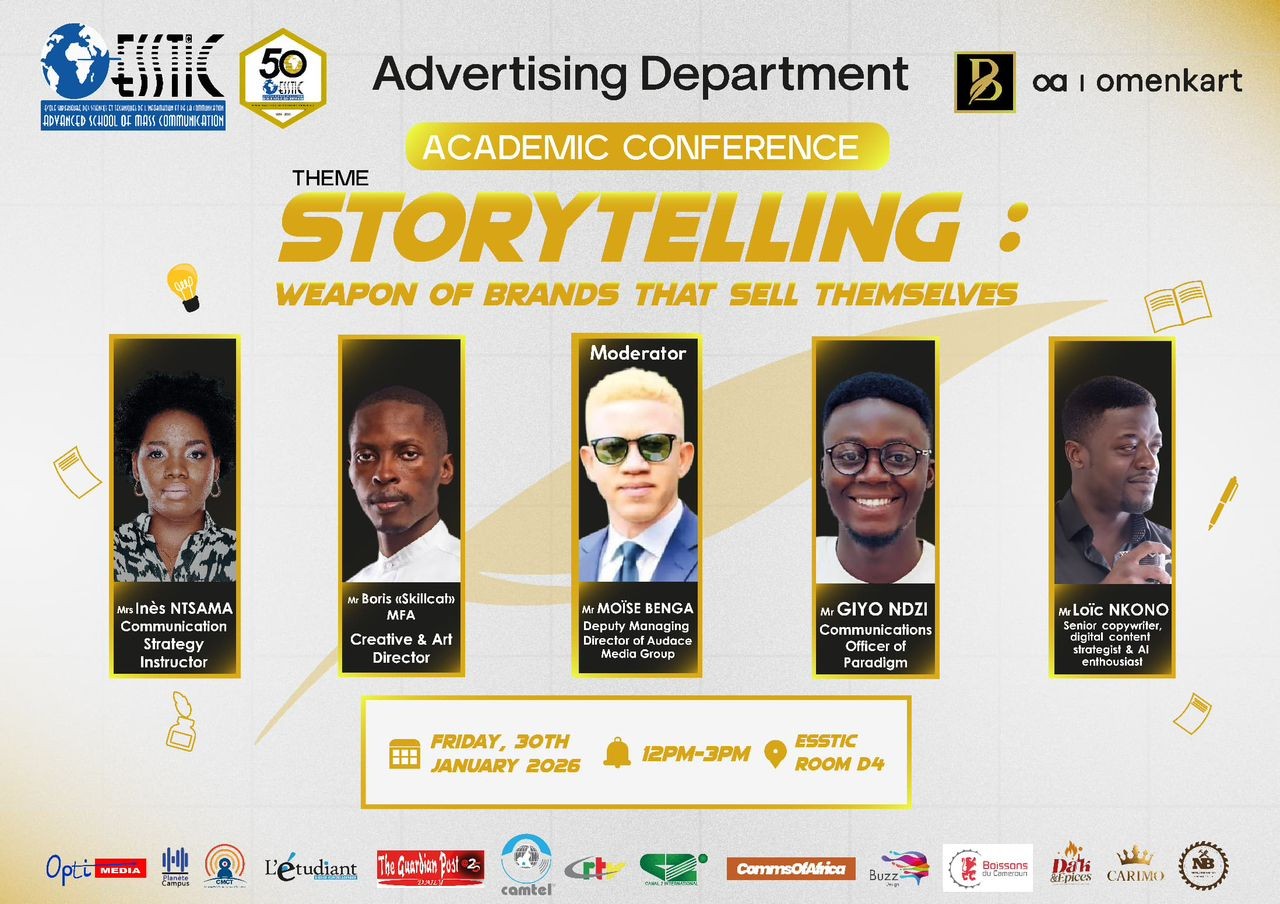
Classrooms and boardrooms rarely meet, but on Friday, January 30, 2026, students at the Advanced School of Mass Communication (ESSTIC) will witness that connection firsthand. The Bolessa Academic Conference, organised by Level 300 Advertising students, promises to transform the traditional lecture into a dynamic space where storytelling, the lifeblood of modern communication, is examined, debated, and demonstrated by industry professionals.
The conference, themed “Storytelling: the weapon of brands that sell,” comes at a moment when brands in Cameroon and across Africa are increasingly turning to narrative to shape their identity and engage audiences. From social media campaigns to traditional advertising, the ability to tell a story effectively can determine whether a message lands or is lost in a sea of content.
“Storytelling today is more than just creative expression,” said Giyo Ndzi, Communications Officer at Paradigm Initiative and one of the panelists. “It is a strategic tool. Knowing the audience, choosing the right format, and delivering the story with precision are what make narratives impactful.”
Students will have the opportunity to engage with a panel of professionals with diverse expertise. Inès Ntsama, content strategy lecturer and podcaster, will discuss the nuances of building audience-centric narratives. Boris Mfa, artistic director and artist, will explore the role of visuals and creative direction in storytelling. Magrace Montigni, copywriter and junior head of advertising at Ideas Box, will share practical lessons on crafting persuasive copy for real campaigns. The session will be moderated by Moïse Benga, Deputy Director General of Audace Media Group, ensuring the conversation remains practical and student-focused.
“Students often learn theory, but the application is what counts,” Giyo added. “This conference allows them to see how the lessons from the classroom translate into the challenges of the real world.” The focus of the panel will be “Formats and styles: the appealing cocktail of modern storytelling.” Here, students will explore how different types of stories, personal narratives, brand chronicles, or issue-based campaigns, can be tailored to specific platforms, whether Instagram, TikTok, corporate websites, or traditional media.
Organisers explained that such initiatives are essential in providing a bridge between academic learning and professional experience.
For Giyo and the other practitioners, participating in academic spaces is part of a commitment to mentorship and professional development.
“Giving back is about helping the next generation make better choices, take informed risks, and understand the stakes of the media and advertising industries,” he said. “It is how knowledge becomes sustainable.”
Students attending the conference will also have time to interact with panelists, ask questions, and even pitch ideas for feedback, a hands-on experience that organisers hope will extend beyond the day’s event.
“The goal is not just to talk about storytelling, but to build confidence and awareness among students,” Giyo noted. “These are the professionals and creatives of tomorrow, and giving them exposure now is an investment in the future of communication in Cameroon.” As ASMAC continues to cultivate a culture of professional engagement, the Bolessa Academic Conference stands out as an example of how collaboration between students and industry practitioners can elevate learning, spark creativity, and turn theoretical knowledge into actionable skill.