By Guy-Bruno Maimo
Cameroon’s Catholic Church has come under scrutiny following Bishop Michael Bibi’s comments that the Church cannot remove political leaders from power. Critics accuse bishops of failing to stand firmly with the people during a moment of national uncertainty. But a closer look at the facts shows a different picture, one that complicates the narrative of a “silent Church.” Appearing on DMRTV, His Lordship Michael Bibi, argued that the Church’s mission is evangelization, not political intervention. “We don’t use the pulpit to settle scores, The Church cannot remove a government for you,” he said, adding that bishops often raise issues directly with political leaders during meetings, even if such exchanges are not public. His remarks sparked controversy, especially among Cameroonians who believe the clergy should take a more visible stand against corruption and electoral injustice.
A Record of Public Statements That Often Goes Unnoticed
Contrary to viral accusations, the Episcopal Conference of Cameroon (NECC) has published at least four major pastoral and socio-political documents in 2024/2025, addressing issues such as electoral fairness, human rights abuses, insecurity in the Anglophone regions, and poverty and governance failures. These documents range from four to nine pages and are publicly available, though rarely read by the wider population.
Several local bishops have also been outspoken. The Bishop of Yagoua has condemned corruption in local administration, the Archbishop of Douala has issued statements on electoral injustice and economic decline, and Bafoussam’s bishop has repeatedly criticized rising insecurity and leadership failures. These interventions are often overshadowed by the louder public discourse on social media.
A Diaspora Voice Challenges the Narrative
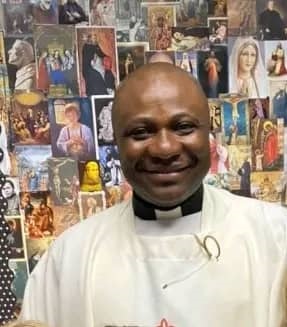
From Detroit, in the U.S. state of Michigan, Rev. Fr. Muma Francis offers a pointed critique. While he acknowledges Bishop Bibi’s courage in clarifying the Church’s role, he contends that issuing pastoral letters and statements alone does not constitute truly being a voice for the voiceless. In his view, history shows that episcopal conferences effecting real change went beyond written statements, engaging directly in electoral processes and standing visibly alongside the oppressed.
He cites the Philippines under Marcos, the DRC under Mobutu and Kabila, Poland under communism, and apartheid South Africa as examples where the Church acted boldly, even risking lives, to confront repressive regimes. According to Fr. Muma, Bishop Bibi’s approach, relying on official electoral results from ELECAM and the Constitutional Council, does not reflect the urgency demanded by the cries of citizens affected by electoral violence or injustice.
Fr. Muma underscores that a Church truly speaking for the voiceless acts decisively during critical moments, even when doing so might provoke threats from an oppressive regime. In his view, merely issuing letters or private interventions does not meet this standard.
The evidence shows the Church has spoken repeatedly, but often in formats the public does not consume, and in tones that many feel are too diplomatic for the severity of Cameroon’s problems. The real issue may not be silence, but a growing disconnect between Church methods and public expectations. Bishops argue for cautious engagement grounded in Canon Law, while citizens, faced with political frustration, expect louder, more direct confrontation. As Cameroon navigates post-election tensions, this gap between perception and reality continues to shape the national conversation about faith, justice, and political responsibility.