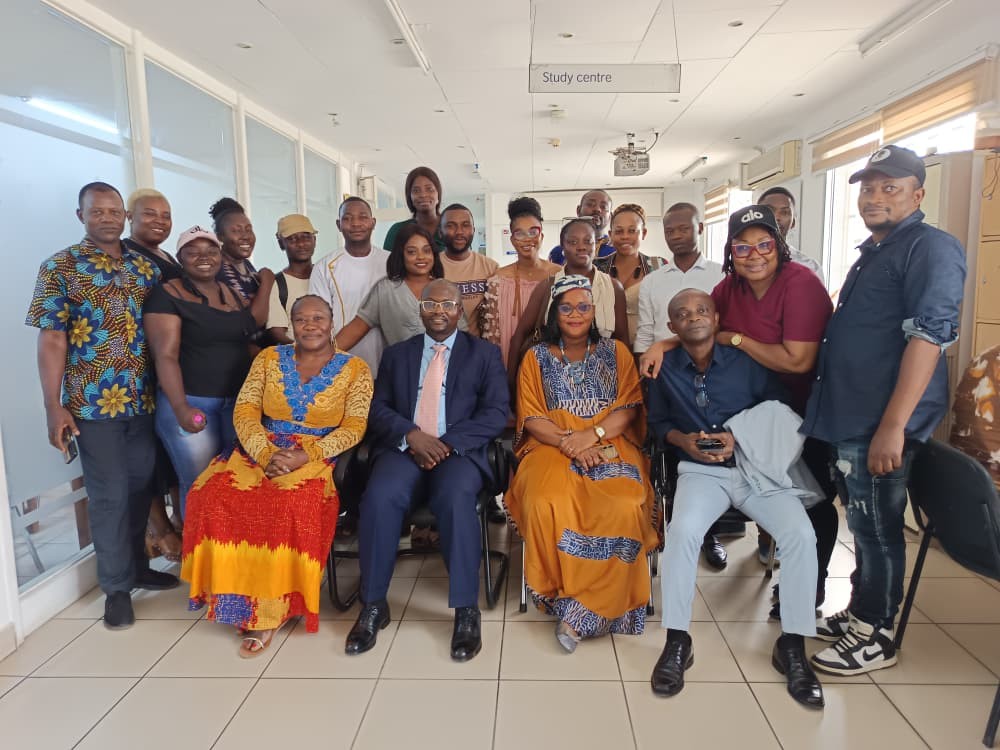
Participants in group picture with resource person (in suit)
By Nformi Ngi Jones Tamfu
In a strategic move to bridge the gap between complex fiscal policy and public understanding, the Cameroon Association of English-Speaking Journalists (CAMASEJ) Douala chapter hosted a high-level capacity-building workshop on Saturday, January 17, 2025.
The session, led by renowned economist Professor Louis Marie Kakdeu, aimed to demystify the intricacies of Cameroon’s 2026 Finance Law. The goal was simple yet ambitious: to provide media professionals with the analytical tools needed to report on the national economy with precision, moving beyond “passive reporting” to active diagnosis.
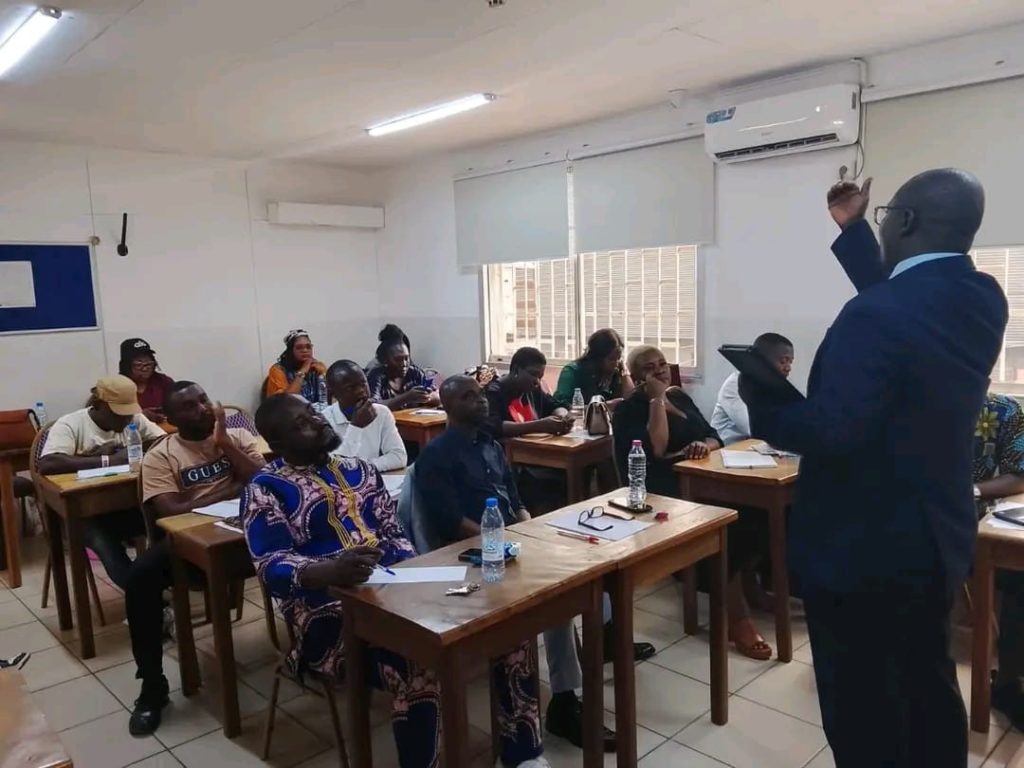
Professor Louis Marie Kakdeu, demystifying intricacies of Cameroon’s 2026 Finance Law
During the seminar, Professor Kakdeu presented a detailed breakdown of the 2026 national budget, which reveals an ambitious fiscal roadmap for the state. The figures show a significant year-on-year increase of approximately 14 percent compared to 2025.
Key Figures of the 2026 Finance Law: Budget Component Amount (FCFA) Total State Budget 8,816.4 Billion (8.8 Trillion) General Budget Allocation 8,683.9 Billion Special Appropriation Accounts 132.5 Billion Projected Domestic Revenue 5,887 Billion.
“Such a jump necessitates rigorous media oversight to ensure transparency and accountability in public spending,” Kakdeu noted, urging journalists to scrutinize the state’s financial strategy.
A central theme of the workshop was the “translation” of these massive figures into terms that resonate with everyday citizens.
Ndih Maureen, President of CAMASEJ Douala, emphasized that the workshop was born out of a need for clarity as the new fiscal year begins.
“The Finance Law has a lot of taxes that weigh finally on the common man,” Maureen stated. “If you don’t have the facts or know the stakes around the law, you cannot report it accurately. We discovered that Cameroon has a huge debt, and it was important to train our journalists on how to report this effectively.”
She added that the initiative was a response to numerous requests from journalists last year who struggled to find resource persons or understand complex provisions. By demystifying the law, the association hopes to strengthen journalistic coverage of public finance and raise the level of civic engagement.
“The objective is to equip our members to be champions of clarity,” a CAMASEJ representative added. “We want to ensure the Cameroonian people are not just observers of the economy, but informed participants.”
The workshop’s relevance transcended linguistic barriers, attracting both English and French-speaking reporters.
Rodrique, a journalist from Le Messager a French newspaper described the session as “very useful” for media practitioners trying to navigate the new laws. Similarly, Regina Etaka of Cameroon Tribune noted that the workshop helped reporters master the basics of government expenditure, loans, and debt.
As the 2026 fiscal year kicks off, the responsibility now falls on the shoulders of the media to hold the government accountable. By focusing on how the budget dictates the cost of living and the quality of public services, these trained journalists are now better prepared to ensure that the FCFA 8.8 trillion budget serves the interests of all citizens, from the boardroom to the street corner.