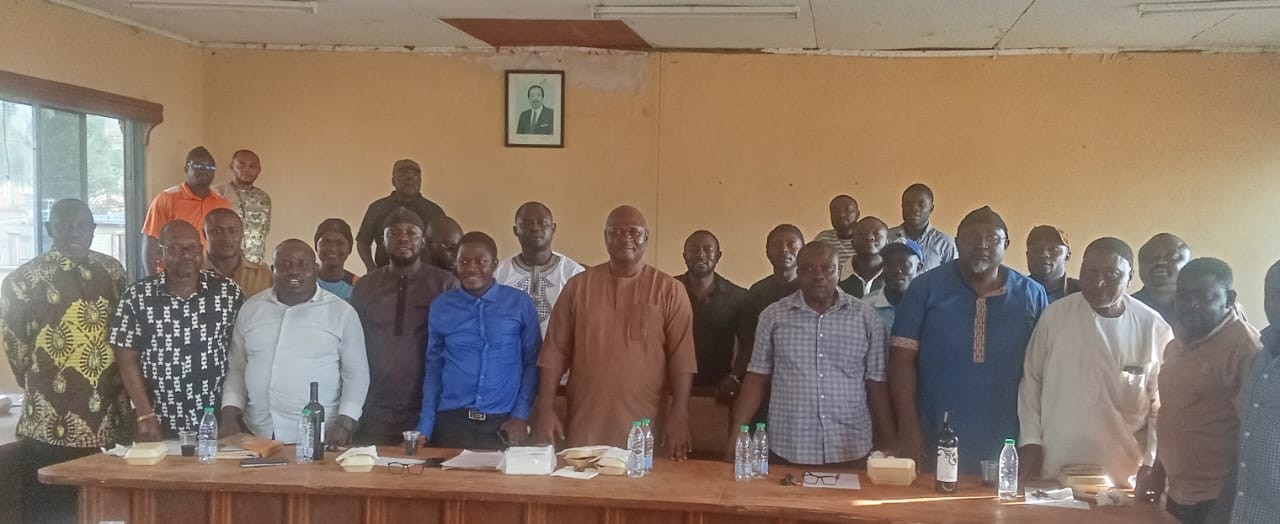
A cross section of the graduating students with officials
By Neba Jerome Ambe
For the first time in nearly nine years, the North West Region has staged a full-scale graduation ceremony for public health training institutions, an event many observers see not just as an academic milestone, but as part of the solution to the Region’s fragile health system.
On December 19, 2025, the conference hall of the North West Regional Fund for Health Promotion was filled to capacity as final-year students from public health personnel schools officially graduated. Parents, relatives, health professionals and administrators gathered in what became a powerful symbol of resilience after years of disruption caused by insecurity and the socio-political crisis.
The ceremony marked the revival of an academic tradition that had been on hold due to safety concerns. Its return reflects deliberate efforts by health authorities to stabilize training, retain talent, and ensure continuity in the production of qualified health workers.
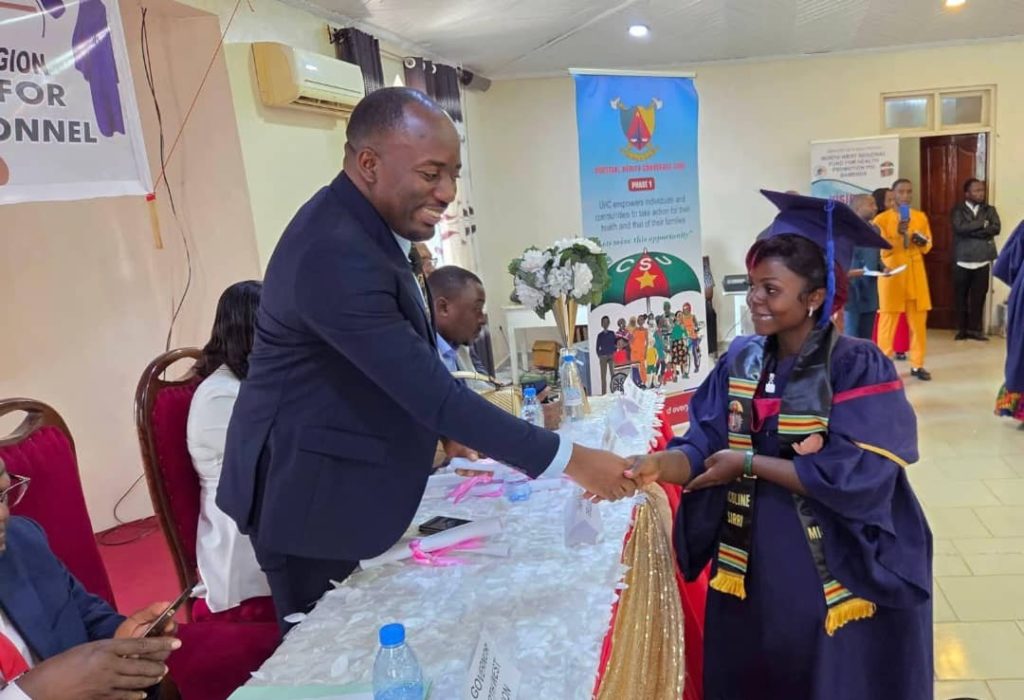
A cross section of the graduating students with officials
High-level administrative and health officials attended, including the Governor of the North West Region, the Senior Divisional Officer for Mezam, the Mayor of Bamenda II, officials of the Ministry of Public Health (MINSANTE), the Director of Bamenda Regional Hospital, and heads of health training institutions. Their presence underscored institutional commitment to rebuilding the Region’s health workforce.
Addressing the audience, the North West Regional Delegate of Public Health, Dr. Lionel Ambe, emphasized that strengthening health services begins with sustained investment in training. He noted that the Region hosts six public health training schools offering programmes in State Registered Nursing (SRN), Midwifery, Laboratory Sciences, Community Health and related disciplines.
“These institutions are the backbone of our health system,” Dr. Ambe said, explaining that the graduates had passed through a rigorous process of continuous assessment, professional examinations and a final national certification. Notably, all candidates who sat for the certification examinations were successful, a result health officials described as encouraging for the quality of training in the Region.
The Governor of the North West Region commended teaching and administrative staff for maintaining academic standards despite challenging conditions. He urged graduates to see themselves as agents of recovery in a competitive and demanding health sector, calling for discipline, ethical conduct and commitment to service.
Reinforcing this message, Dr. Bodzewan Emmanuel, Dean of Directors of Nursing Schools, highlighted professionalism as the foundation of public trust in healthcare, while educationist Forbang Goodwill challenged the graduates to embrace innovation, noting that health practice is evolving rapidly and requires adaptability.
The graduating cohort, comprising nurses, midwives, senior and assistant laboratory technicians, and community health workers, represents a practical response to chronic human-resource shortages in health facilities, particularly in underserved and hard-to-reach communities.
Health authorities say their deployment is expected to improve access to care, strengthen primary healthcare delivery, and enhance disease prevention and patient-centered services. For communities that have endured years of limited services, the arrival of newly trained personnel offers renewed hope.
Among the laureates were Nsaibinla Bernice and DEA Kantchouet Jean Oscar, recognised as best overall students in State Registered Nursing. Graduating students described the moment as the beginning of a professional calling, leaving school not just with certificates, but with the knowledge, ethics and responsibility required to serve.
More than a celebratory event, the graduation signals a strategic investment in human resources for health. In a Region rebuilding from prolonged crisis, restoring training pipelines and deploying qualified professionals is a concrete step toward a stronger, more equitable and responsive healthcare system.
As one health official summarised, the ceremony was “proof that even in difficult times, solutions are possible when institutions, educators and communities commit to the future.”