By Sunyin Clarita
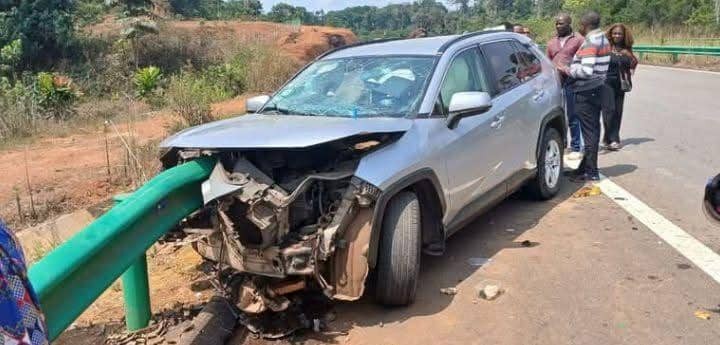
When discussions about road accidents begin in Cameroon, one explanation quickly comes to mind for many citizens. People often blame potholes, broken bridges, narrow highways and poorly maintained roads. While these problems exist and certainly contribute to dangerous driving conditions, the widely held belief that bad roads are the main cause of road accidents in Cameroon is not entirely true. Evidence from official reports and safety studies indicates that human behaviour is the leading cause of road accidents in the country. Understanding this reality is essential if Cameroon hopes to reduce the alarming rate of deaths and injuries on its roads.
Road accidents have become one of the most serious public safety challenges in Cameroon. Every year, thousands of people are involved in crashes that result in injuries, disabilities and loss of life. According to road safety statistics and public health estimates, road traffic accidents are among the leading causes of death in the country, particularly among young people and economically active citizens. Reports have indicated that an estimated 18 people die daily on Cameroonian roads due to traffic accidents, translating into a death almost every hour and a half (World Health Organization road safety estimates and national transport reports). These figures reveal the scale of the crisis and highlight the urgency of addressing its real causes.
Contrary to popular belief, research shows that human error accounts for the majority of road accidents in Cameroon. Studies conducted by transport and road safety authorities suggest that between 70 percent and 84 percent of road accidents in the country are caused by human factors such as reckless driving, overspeeding, poor judgment and lack of attention (Cameroon road safety studies and transport sector analyses). This means that even if every road in Cameroon were perfectly constructed and maintained, most accidents would still occur because of the behaviour of drivers and other road users.
Overspeeding
Over speeding stands out as one of the most significant contributors to road accidents. Many drivers, especially those operating commercial transport vehicles, frequently exceed speed limits in an attempt to make more trips and increase daily income. This dangerous practice reduces reaction time and increases the severity of crashes when they occur. Reports from transport monitoring agencies have attributed roughly one third of road accidents in Cameroon to excessive speed alone (Cameroon News Agency transport safety report). When vehicles travel at high speed on busy highways or in populated areas, even a minor mistake can lead to catastrophic consequences.
Reckless driving
Reckless driving is another major factor. Dangerous overtaking, ignoring traffic lights and road signs, using mobile phones while driving and driving under the influence of alcohol or drugs are common practices on many roads. Such behaviour transforms vehicles into potential weapons. Law enforcement officers regularly report cases where drivers deliberately violate traffic regulations, putting passengers and pedestrians at risk. These actions are not linked to road conditions but to the choices made by individuals behind the wheel.
Poor driver training
Poor driver training also contributes significantly to the problem. In recent years, concerns have been raised about the quality of driving schools in some parts of Cameroon. Investigations have revealed the existence of illegal or poorly supervised driving schools that issue certificates without proper training. As a result, some drivers obtain licences without mastering essential driving skills or understanding road safety rules. Transport sector observers have noted that inadequately trained drivers are more likely to cause accidents due to poor judgment and lack of experience (Cameroon News Agency report on fake driving schools and road accidents).
Driver fatigue
Driver fatigue is another overlooked cause of road accidents. Many commercial drivers travel long distances without sufficient rest. Some drive throughout the night in order to meet tight schedules or increase profits. Fatigue reduces concentration, slows reaction time and increases the likelihood of errors. Studies have shown that a significant percentage of road accidents in Cameroon occur at night, when visibility is reduced and driver exhaustion is more pronounced (road safety observations reported by national transport monitoring services). In such conditions, even experienced drivers can lose control of their vehicles.
Mechanical failure
Mechanical failure also plays a role. Many vehicles operating on Cameroonian roads are old and poorly maintained. Faulty brakes, worn tyres and defective headlights are common problems. Some vehicle owners neglect maintenance due to financial constraints, not realizing that mechanical failure at high speed can be deadly. Although mechanical issues account for a smaller percentage of accidents compared to human error, they often lead to severe crashes when they occur (transport safety assessments and vehicle inspection reports).
Environmental and infrastructural factors
Environmental and infrastructural factors such as bad roads, poor signage and slippery surfaces certainly contribute to accidents, but they are not the primary cause. Studies estimate that road conditions account for roughly 10 to 17 percent of road accidents in Cameroon, far less than the proportion attributed to human behaviour (transport sector safety analyses and infrastructure assessments). While improving road infrastructure remains important, focusing solely on road conditions risks ignoring the larger behavioural issues that lead to accidents.
Several tragic accidents recorded in Cameroon over the years illustrate this reality. In January 2021, one of the deadliest road accidents in the country’s history occurred near Dschang in the West Region. A passenger bus collided with a truck carrying fuel, triggering a massive explosion that killed more than 50 people and left many others injured. Investigations suggested that speeding, negligence and the illegal transportation of fuel were major contributing factors (BBC News and national media reports on the Dschang bus truck explosion). The tragedy shocked the nation and highlighted the devastating consequences of reckless behaviour on the road.
In December 2023, multiple road crashes across Cameroon claimed at least 18 lives within a short period. Authorities linked the accidents primarily to excessive speed and dangerous overtaking by drivers (StopBlaBlaCam national accident report). These incidents occurred on different highways, demonstrating that human behaviour remains a consistent risk factor regardless of location.
Another fatal accident occurred in Ekona in the South West Region in July 2025 when a passenger bus collided with a truck carrying sand. At least nine people died and several others were injured in the crash. Witnesses and preliminary reports pointed to reckless driving and a violent head on collision between the two vehicles (The Guardian Post Cameroon report on Ekona accident). Once again, the cause was not poor road conditions but dangerous driving decisions.
In 2024, official figures indicated that Cameroon recorded more than 1,700 road accidents resulting in hundreds of deaths and thousands of injuries. Transport authorities identified speeding, driver fatigue and failure to respect traffic rules as the main causes of these accidents (national transport and public works reports on road safety statistics). These figures reinforce the conclusion that human factors remain the dominant cause of road crashes.
Beyond the human tragedy, road accidents also impose a heavy economic burden on the country. Medical treatment for accident victims, repair of damaged vehicles and loss of productivity cost billions of francs each year. Families lose breadwinners, businesses lose workers and the national economy suffers. Resources that could be invested in development are instead spent addressing the consequences of preventable accidents (transport sector economic impact assessments and public health expenditure reports).
Public perception, however, continues to focus heavily on bad roads. This perception is understandable because many roads in Cameroon requires improvements. Potholes, narrow lanes and lack of proper signage can create dangerous situations, especially during the rainy season. Yet blaming bad roads alone diverts attention from the behaviour of road users and the enforcement of traffic laws. It creates the impression that accidents are inevitable rather than preventable.
Reducing road accidents in Cameroon will require a comprehensive approach that addresses human behaviour. Stronger enforcement of traffic laws is essential. Drivers who exceed speed limits, drive under the influence of alcohol or ignore traffic rules must face consistent penalties. The use of speed cameras and monitoring systems can help deter reckless driving and improve compliance with road safety regulations.
Improving driver training is equally important. Authorities must regulate driving schools more effectively to ensure that all drivers receive proper instruction before obtaining licences. Regular refresher courses for commercial drivers can help reinforce safe driving practices and update them on new traffic regulations.
Public awareness campaigns can also play a vital role. Citizens must be educated about the dangers of reckless driving and the importance of road safety. Passengers should feel empowered to speak out when drivers behave dangerously. Communities, schools and transport unions can work together to promote a culture of responsibility on the roads.
Vehicle maintenance should not be neglected. Regular inspections can help remove unroadworthy vehicles from circulation and prevent accidents caused by mechanical failure. Transport companies must take responsibility for ensuring that their vehicles are in good condition and that drivers are fit to operate them.
Improving road infrastructure remains necessary, but it must be combined with behavioural change. Smooth highways alone cannot guarantee safety if drivers continue to ignore basic rules. A well constructed road can quickly become a scene of tragedy when used irresponsibly.
Did you know that the key to reducing road accidents in Cameroon lies not only in building better roads but also in building better habits among road users. Recognizing that bad roads are not the main cause of accidents is a crucial step toward meaningful change. By addressing human behaviour, strengthening enforcement and promoting a culture of responsibility, Cameroon can transform its roads from corridors of danger into pathways of safety and progress for all citizens.