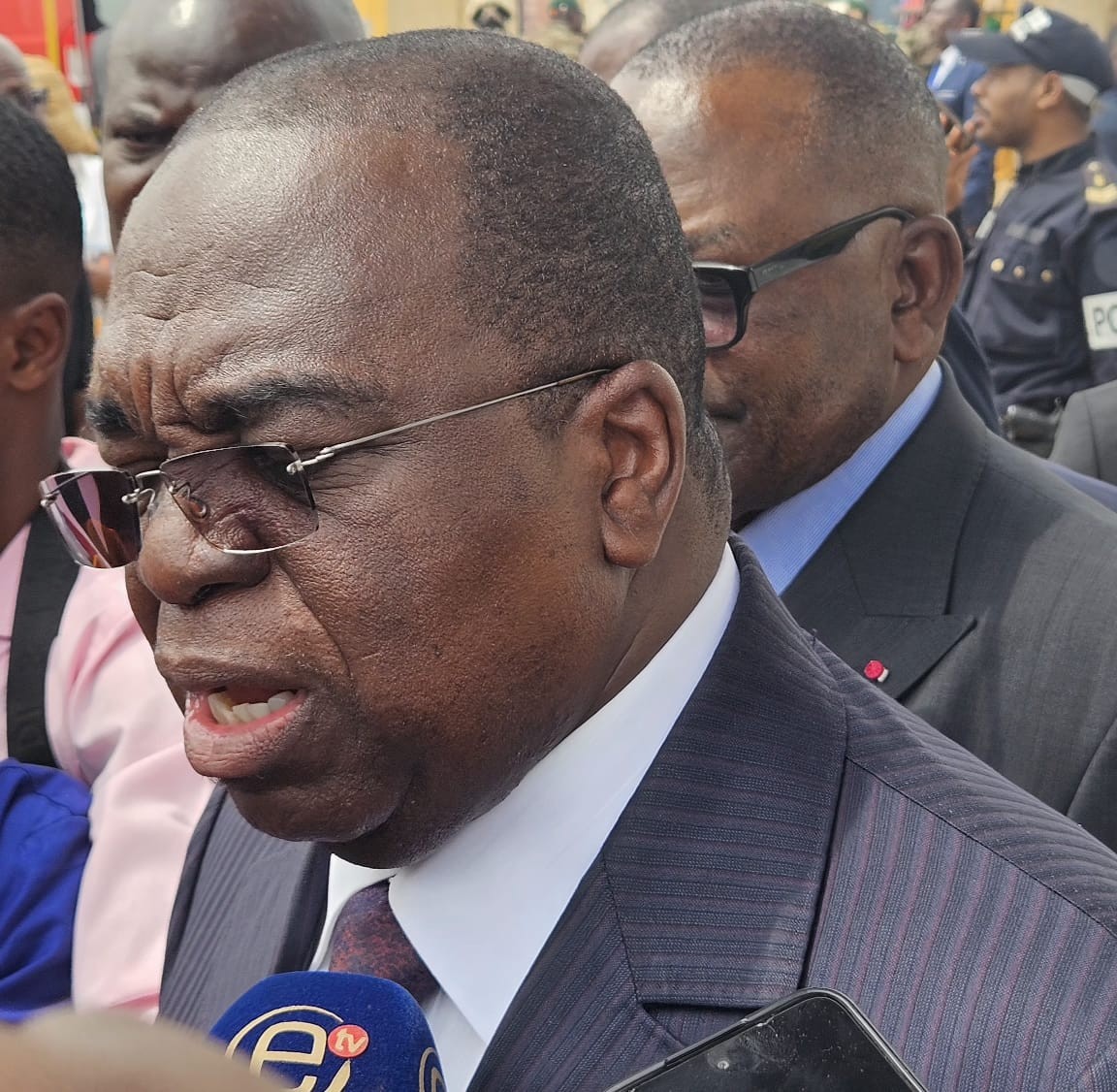
Cletus Anye Matoya addressing the media & staff of the institution
By Neba Jerome Ambe
At a time when food insecurity continues to threaten livelihoods in Cameroon’s Northwest Region, the North West Development Authority (MIDENO) says it has stepped up concrete support to farmers, reaching an estimated 25,000 beneficiaries in 2025 through targeted agricultural and infrastructure interventions.
The assurance was given by MIDENO Director General, Cletus Anye Matoya, during the institution’s annual press conference held on December 31, 2025, where management presented a comprehensive review of projects implemented despite the Region’s lingering socio-economic challenges.
Central to MIDENO’s 2025 interventions was its role as an executing agency of the Cameroon Emergency Food Crisis Response Project (PULCCA), a Government-World Bank initiative designed to curb food insecurity in six Regions, including the North West.
Under a framework agreement signed on February 14, 2024, MIDENO implemented activities under the 2024–2025 phase of PULCCA, a programme valued at nearly CFA 5 billion.
According to the Technical Progress Report presented by Nde Emmanuel, Director of the Technical Department, the project recorded tangible results on the ground. These include the construction of 111 community storage facilities, the supply of warehouse equipment kits, and post-harvest management training for over 1,500 beneficiaries.
In a deliberate effort to protect the most vulnerable, the project also integrated 1,000 women refugees and internally displaced persons into local agricultural organisations, while 10,700 farmers received improved seeds and farm equipment, with women accounting for 60 percent of the beneficiaries.
Beyond emergency food interventions, MIDENO also focused on strengthening agricultural value chains to improve productivity and farmer incomes.
Officials reported 100 percent financial execution of activities carried over from 2024 and planned for 2025. During the period under review, MIDENO distributed 30 tons of maize seeds to 5,000 farmers in 2024, followed by 15 tons to 2,500 farmers in 2025. Support was also extended to potato and wheat farmers through the distribution of certified planting materials.
The Region’s once-thriving coffee subsector also received renewed attention through funding from the National Coffee and Cocoa Office (ONCC). Achievements included the construction and equipping of an ultra-modern coffee shop, the rehabilitation of the Mezam Area Cooperative Union warehouse, and a series of sensitisation workshops aimed at revitalising production and marketing.
In response to climate change and environmental degradation, MIDENO rolled out several sustainable agriculture and food security initiatives, including the distribution of 10,000 eco-friendly trees and the deployment of three tricycles to support waste management in Nkambe.
Officials said the interventions are already contributing to improved environmental resilience and stronger local ecosystems.

Roads, Recovery and Reconstruction
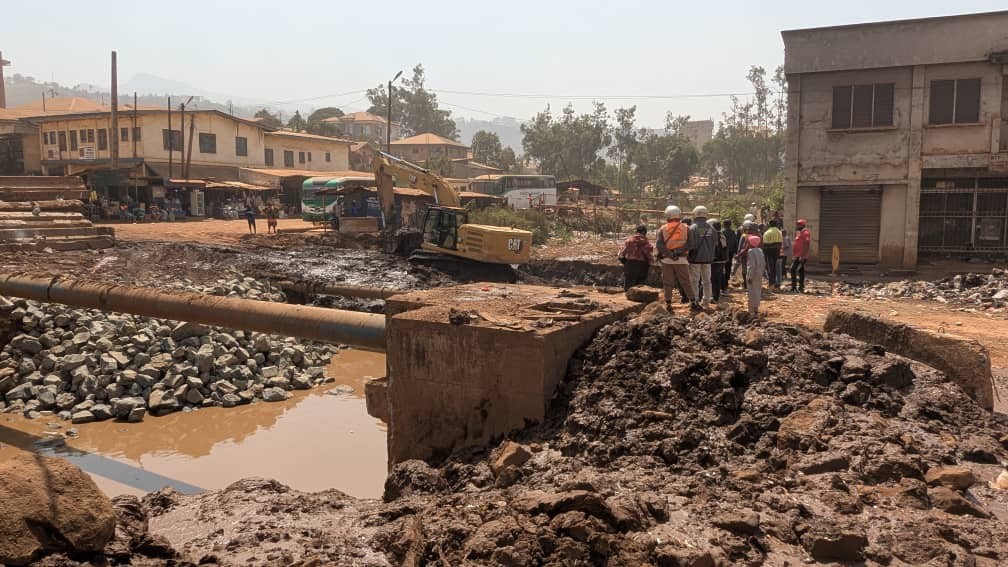
Infrastructure development also featured prominently in MIDENO’s 2025 portfolio. Work on the 41.7-kilometre Galim–Bamenyam–Awing–Akum-road recorded significant progress, with phase one fully completed and phase two nearing completion at 93 percent.
Meanwhile, under the Presidential Plan for Reconstruction and Development (PPRD), MIDENO implemented road and bridge projects worth CFA 996.3 million, aimed at restoring economic activity and social cohesion in communities affected by the crisis.
Presenting the financial report, Administrative and Finance Director Bawe Ernest Ndi disclosed a 78 percent budget execution rate for 2025, while calling for improved resource disbursement mechanisms and adjustments to cope with price fluctuations.
Despite the difficult operating environment, Director General, Matoya reaffirmed MIDENO’s resolve to remain responsive and transparent. “Even in the face of crisis, we have chosen to adapt, engage communities, and deliver results,” he said, pledging continued farmer support with essential inputs in 2026.
He added that MIDENO’s future focus would prioritize climate resilience, youth employment, and infrastructure development, stressing that sustainable progress can only be achieved through collective effort.