By Neba Jerome Ambe
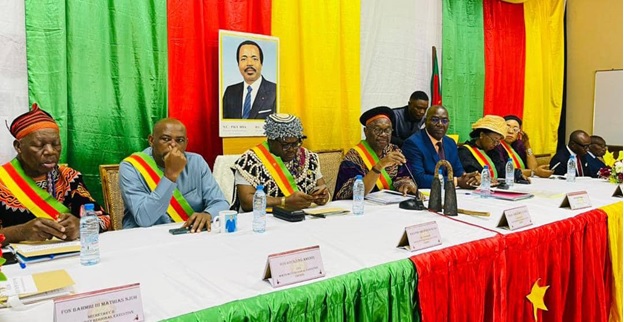
The North-West Regional Assembly has adopted its 2026 budget, closing a historic statutory session with a comprehensive review of achievements, challenges, and future priorities. The deliberations culminated in a valedictory address by the President of the North-West Regional Executive Council, Professor Fru Angwafo, marking the end of the Region’s pioneer mandate under Cameroon’s decentralisation framework.
Education
The Assembly noted significant movement in the education sector, with 110,000 students enrolled in secondary schools in 2025, up from 100,000 in 2024. Though far below the 220,000 learners recorded in 2015 before the crisis, the current numbers represent a dramatic rebound from the 11,000 students enrolled in 2019, the lowest point of the conflict period.
Despite this recovery, the Assembly highlighted ongoing constraints, notably the shortage of teachers, insufficient school personnel, and the rising number of physically challenged learners, estimated at 10,000, requiring inclusive infrastructure and digital learning tools.
The Region’s 143 newly created technical colleges were cited as a potential solution to the scarcity of technicians needed to support technological and industrial growth. However, the Assembly noted with concern that few of these institutions are operational, urging swift interventions to accelerate their opening. “Human development rests on education,” the deliberation emphasized, “and the quality of our welfare depends on the strength of our human capital.”
Health Sector
The session also reviewed the Region’s health indicators, revealing persistent gaps in infrastructure and access. Concerns were raised about maternal and child health, uneven distribution of health facilities, and the need to strengthen the primary health package as part of efforts toward universal health coverage. The Assembly underscored that improving the health map must remain a top priority for regional development.
Digitalisation and Public Works
A notable highlight came from the project-planning sector. Members were introduced to the new online project submission and contract award platform, designed to improve transparency and streamline procurement. Reforms surrounding the deposition of bid bonds at the Deposit and Consignment Fund (DCF) were also reviewed.
An impressive 92% physical execution rate for 2025 projects was reported, this despite the challenges of digital transition and intermittent lockdowns. The Assembly acknowledged that significant efforts are still required to catch up with e-administration and e-commerce within a rapidly evolving digital economy.
2026 Budget Adopted At 15.073 Billion FCFA
The Assembly formally adopted the 2026 budget at 14.6 billion FCFA, representing a major increase from previous years. In addition, the North-West Region earned 425,144,710 FCFA in supplementary funding after meeting the Minimum Mandatory Conditions set by the Local Governance and Resilient Communities (PROLOG) programme. This brings the total operational budget for 2026 to 15.073 billion FCFA.
President Fru Angwafo’s Emotional Valedictory Address
In a reflective and forward-looking speech, Professor Fru Angwafo, the Executive President of the North West Regional Assembly expressed profound gratitude as he completed his tenure as the pioneer President of the Regional Executive Council. He emphasized that the Assembly’s work over the past five years was grounded in the belief that “sustainable development begins with the moral, intellectual, and economic empowerment of our people.”
Focus on Youth, Excellence, and Social Cohesion, the President highlighted initiatives that prioritised: youth empowerment and moral rearmament, scholarships based on merit and effort, regional honor rolls for academic excellence and recognition of sports and athletic achievements.
He celebrated gains made in rebuilding community spirit, noting the success of public recreational spaces and cultural activities developed under the Priority Development Index (PDI) framework. These activities, he said, reawakened the spirit of U na Mi, Mi na U, Wi bi Wi, a regional ethic of unity and mutual respect.
Prof. Angwafo cited the establishment of the North-West Digital Innovation Hub as a key step in stimulating entrepreneurship and expanding markets. He praised partnerships with local innovators, farmers, and development organisations such as NOWEDIF, GRACARO, COMINSUD, and SHUMAS.
He also emphasized the Region’s push toward community forest regeneration and waste-to-wealth initiatives, affirming that environmental sustainability would shape the next phase of regional development. He also expressed appreciation to the Head of State (HoS), the President of the Republic (PRC) for recognising the Pegion’s PDI community-development model as a blueprint for possible national building.