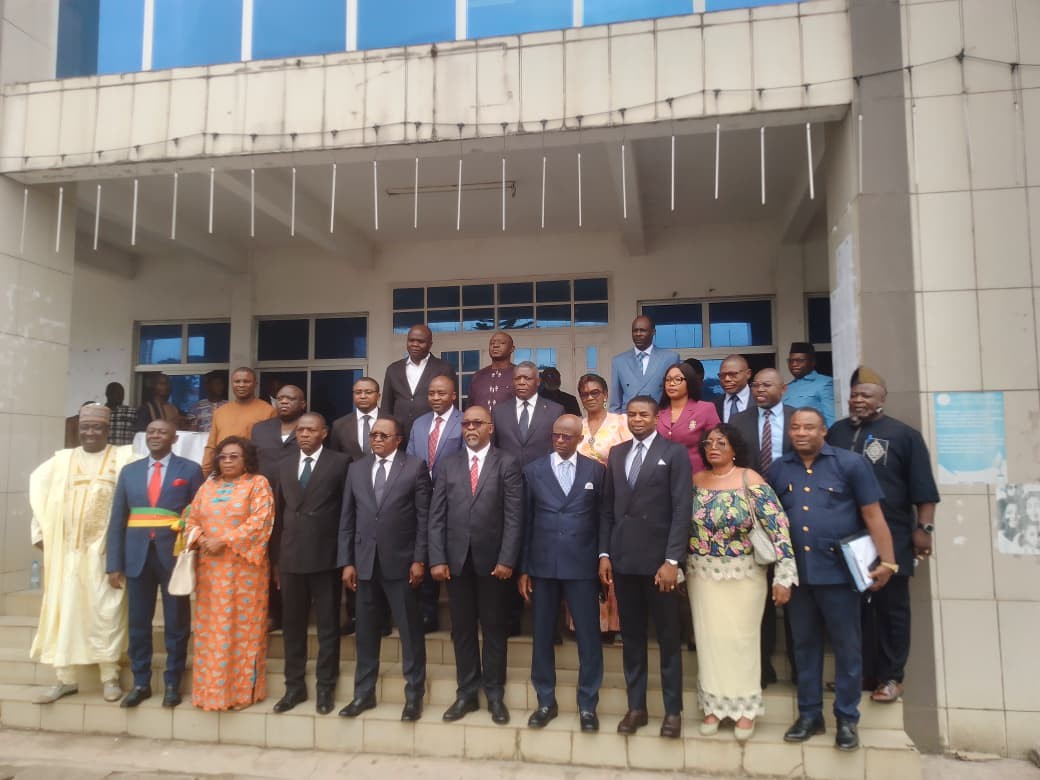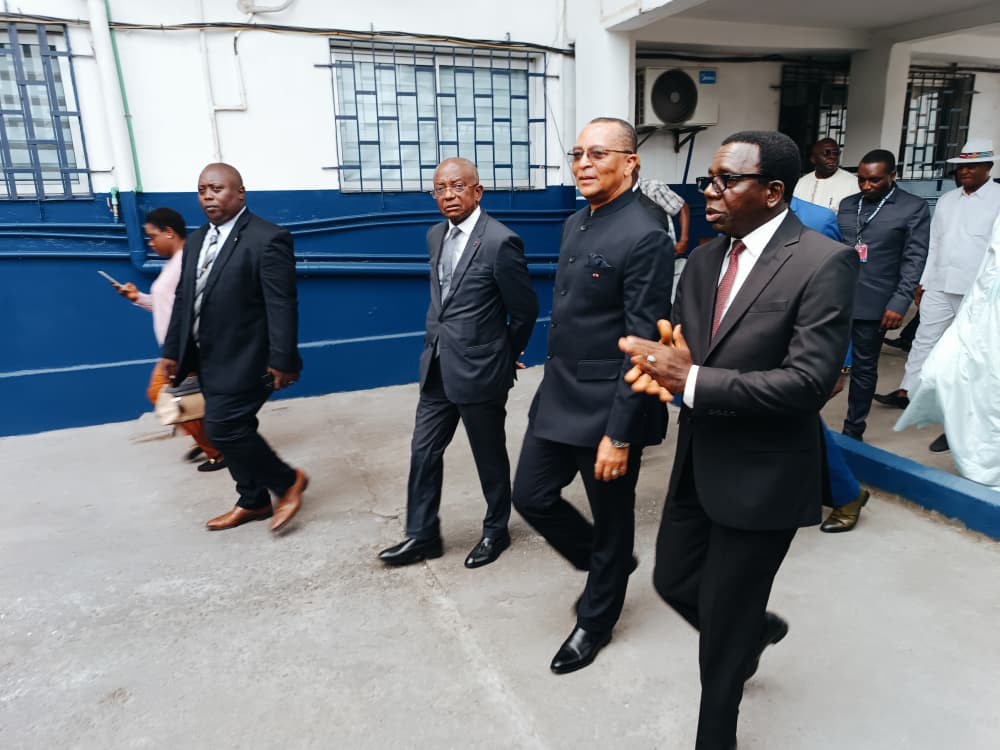
Manager Chuyeh Edward Mbunkur showcasing the RDR infrastructures to the Boardchair Cyrus Ngo’o et al
By Nformi Ngi Jones Tamfu
On January 9, 2025, the base of the Port Authority of Douala-Bonaberi (PAD) was transformed into a site of celebration as the Towing Management Unit widely known by it’s French acronym as RDR S.A. marked its fifth anniversary. The event served as a powerful validation of Cameroon’s 2016 decision to reclaim sovereign control over strategic port activities, turning what was once a deficit-ridden sector into a thriving engine of national economic growth.
The ceremony was attended by a high-profile delegation led by the General Manager of the PAD and Board Chair of the unit, Cyrus Ngo’o, alongside his deputy, port service users, and shippers. Hosting the guests was Chuyeh Edward Mbunkur, the RDR Unit Director, whose leadership has been instrumental in the unit’s rapid transformation since its inception in 2021.

The story of RDR S.A. is one of dramatic economic recovery. For 17 years, port towing was managed under a concession by BOLUDA CAMEROON. In its final year (2020), the private concessionaire recorded a turnover of FCFA 3.389 billion, paying only FCFA 587 million as royalties to the PAD.
Under the new “normalization” model implemented by the PAD General Management, the first year of RDR’s operation (2021) saw turnover jump to FCFA 4.345 billion marking a 28% increase. By December 31, 2025, that figure had skyrocketed to FCFA 7.263 billion, more than doubling the performance of the private era.
The financial windfall for the state is even more staggering. In just five years, RDR S.A. has paid FCFA 5.4 billion in royalties to the PAD. To put this in perspective, the previous concessionaire paid only FCFA 7.62 billion over nearly two decades. Effectively, RDR has generated 70% of the value of a 17-year concession in less than a quarter of the time.
A key highlight of the anniversary was a tour of the facilities, where Director Chuyeh Edward Mbunkur showcased the transformed and modernised infrastructure and modernised fleet. Central to this success has been the acquisition of two new-generation tugboats. Named after iconic figures in Cameroonian history, these vessels have modernised the port’s “traction capacity” to meet international maritime standards.
“These results are not the product of chance,” noted Board Chair Cyrus Ngo’o during his address. “They are the result of strategic choices and the acquisition of new-generation tugboats that strengthen our efficiency in the service of port security.”
The RDR success story isn’t just about the balance sheet. As the exclusive provider of towing at the Douala-Bonaberi port, the unit has expanded its mission to include: Security monitoring of vessels. Refloating assistance for ships in distress.
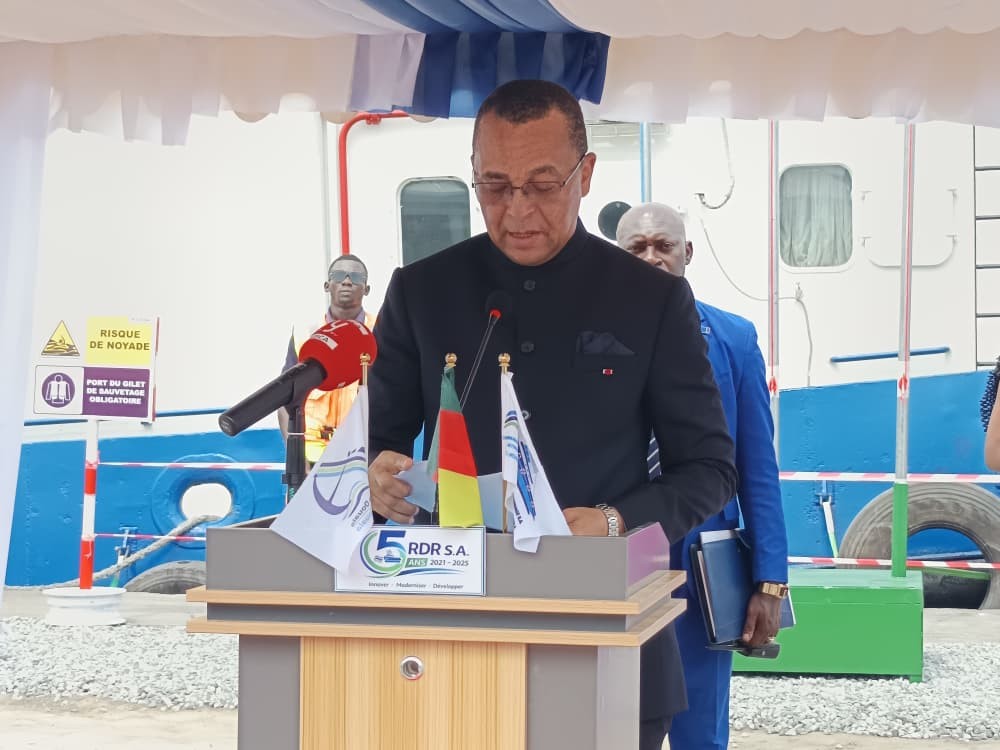
Cyrus Ngo’o General Manager PAD/Boardchair of the RDR
Furthermore, the unit has become a champion for local employment. Unlike the previous concession model, RDR S.A. has focused on exclusively national direct employment, investing heavily in the professional certification of Cameroonian sailors and technicians.
The synergy between the Towing Regulatory Authority and the Dredging Authority was highlighted as a cornerstone of the port’s new competitiveness. By maintaining water depths and reducing “port stay” times, RDR S.A. has made the Port of Douala-Bonaberi a more attractive and predictable destination for international shipowners and regional hinterland countries.
As the ceremony concluded, Cyrus Ngo’o urged the team to maintain this “normalisation” trajectory. “The anniversary we celebrate today is not an endpoint, but a stepping stone,” he stated. “We are embarking on a new era characterised by modernisation and a renewed dedication to our national economy.”
With tax contributions to the Public Treasury reaching FCFA 4.879 billion over the last five years, RDR S.A. has officially silenced critics of the state-managed model, proving that with rigorous governance, public limited companies can indeed outperform private concessions for the greater good of Cameroon and her economy.