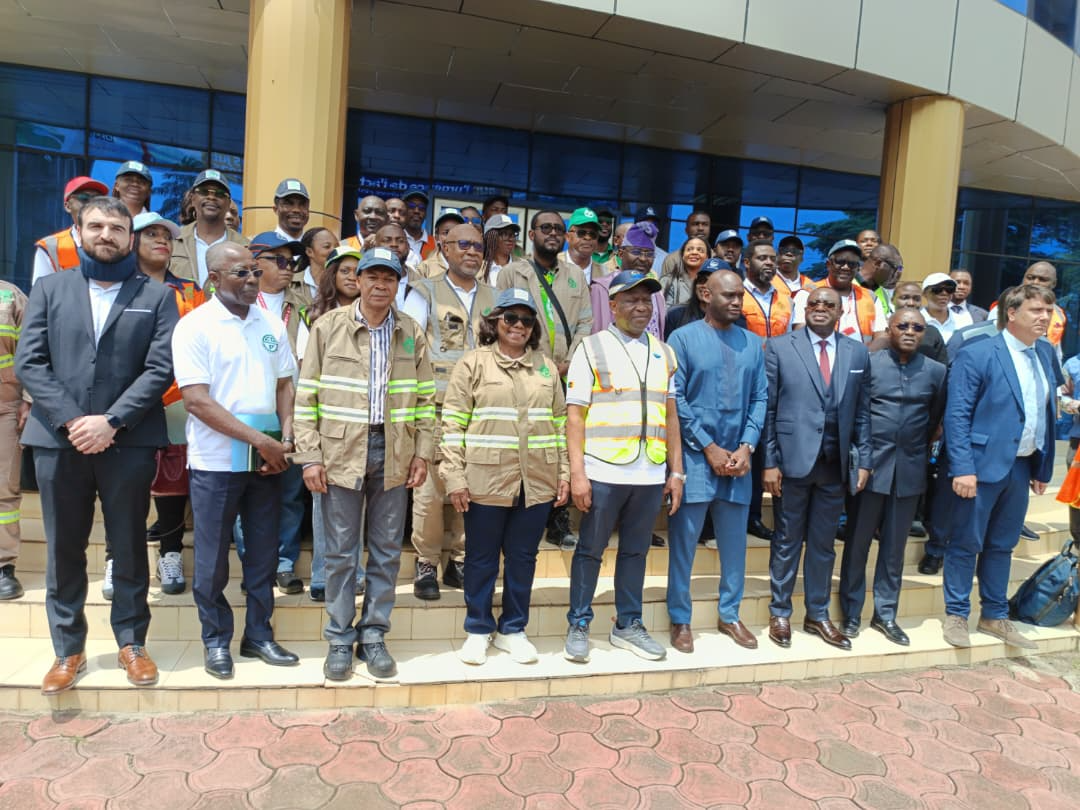
Family picture at the PAK Headquarter
By Nformi Ngi Jones Tamfu
In a momentous and strategic effort aimed at cementing the economic and energy independence of Cameroon and the Central African sub-region, the General Managers of the Port Authority of Kribi (PAK) and the Cameroonian Petroleum Depots Company (SCDP) visited the construction site of the highly anticipated Kribi Hydrocarbon Terminal (THK) on Friday, June 5, 2026. This significant visit not only represents the culmination of a decade and a half of planning and development but also marks the commencement of a rigorous 30-month countdown to create what is poised to be a major energy hub in the region.
The undertaking was catalyzed by a vital endorsement from President Paul Biya, who recognised the pressing need for enhanced downstream infrastructure in light of recent global energy supply disruptions. In a forward-thinking move, he integrated a specialised funding provision into the national petroleum pricing framework, thereby ensuring that the project’s financial backbone is fortified against the backdrop of rising global energy volatility. This ambitious infrastructure initiative is meticulously divided into two coordinated components: a maritime port segment that will be overseen by PAK, and a downstream logistics framework that is driven by SCDP.
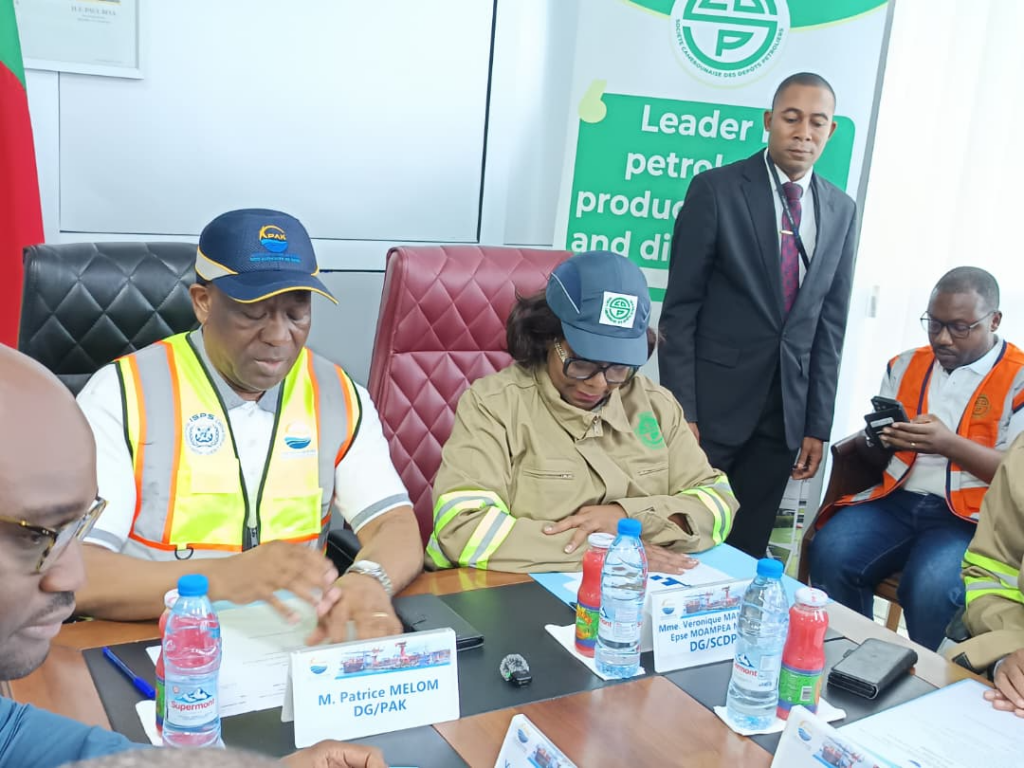
SCDP/PAK Briefing at the PAK Headquarters
During an intensive site visit in the sweltering afternoon at the Mboro oceanfront, PAK’s General Manager Patrice Melom articulated the complex engineering challenges that lie ahead. Standing atop the imposing one-kilometer breakwater, he shared insights into the cutting-edge maritime infrastructure set to be developed. A state-of-the-art quay is slated for construction along the breakwater, specifically designed to accommodate colossal oil tankers, with capabilities to dock vessels measuring up to 230 meters in length and weighing as much as 80,000 tons.
“The terminal will happen,” Melom confidently declared during a morning briefing at the PAK headquarters, alluding to the expertise and determination that will drive this project forward. From the quayside, the hydrocarbons will be transported via three advanced marine loading arms that will stand at an impressive height of 40 meters. These arms will channel the products down a 900 meters pipeline directly to a strategically designed zone known as the manifold area. Melom vividly characterised the manifold as a “massive industrial power strip,” referring to its potential to serve multiple operators simultaneously.
“It’s like an electrical multi-plug where multiple industrial operators can come, plug in their own lines, and draw the hydrocarbons they need for storage depots or refineries,” Melom elaborated, showcasing the manifold’s role in fostering industrial collaboration.
The project has already attracted the attention of several key industry players. While SCDP will serve as the primary anchor user of the terminal, private sector entities such as Albutumen which plans to produce road-utility bitumen and the SeaStar refinery initiative have expressed significant interest in leveraging the new terminal once it becomes operational. Upon completion, the terminal is projected to facilitate the processing of an initial volume of 5 million tons of petroleum products annually, with scalable design features that could expand this capacity to an impressive 10 million tons per year.
“If this terminal is not built, none of the downstream storage projects can exist,” Melom emphasized, highlighting the project’s crucial role in the broader landscape of Cameroon’s energy strategy.
For SCDP’s General Manager Véronique Manzoua Epse Moampea Mbio, the construction of the terminal represents a vital and timely solution to a persistent logistical bottleneck that has long drained financial resources from the state. Currently, alternative ports face limitations related to shallow drafts, which compel international fuel vessels to linger for extended periods in harrowing wait times or to embark on multiple, expensive shipping routes.
“Every single day a vessel spends waiting past its regulated window costs an average of $25,000 in demurrage fees,” Moampea alerted. “If a ship sits idle for a month, do the math. That is money that inflates import costs and diminishes state reserves. The establishment of the Kribi terminal will fundamentally alter this dynamic.”
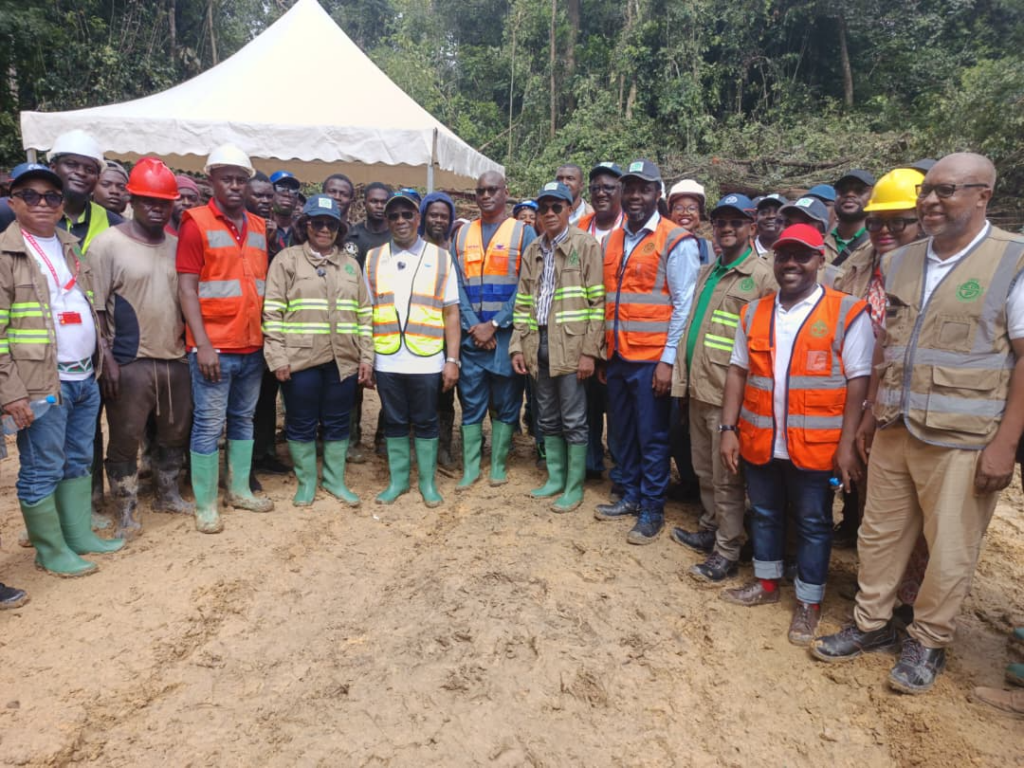
Family photo at the Kribi Hydrocarbon Terminal Site
With a favorable natural deep-water draft ranging from 15 to 16 meters, Kribi is set to accommodate vessels at maximum capacity with utmost ease. This significant advantage translates into a notable economy of scale, which means fewer vessel arrivals will be necessary each month to satisfy national fuel demands. Consequently, this will alleviate congestion at the port and provide greater stability to local markets, insulating them from potentially disruptive fluctuations in global supply chains.
Upon the successful completion of its initial phase, the Kribi depot is projected to feature a substantial storage capacity of 140,000 cubic meters dedicated to refined fuels and an additional 12,000 metric tons allocated for liquefied petroleum gas (LPG). Future expansion plans envision a grand scale-up to an impressive 280,000 cubic meters of fuel storage, thereby significantly enhancing the country’s energy security.
Moreover, this new terminal is not just an infrastructural upgrade; it serves a compelling geopolitical objective as well. By establishing Cameroon as the principal energy transit corridor for its landlocked neighbours, Chad and the Central African Republic, the terminal reinforces the country’s role within the Economic and Monetary Community of Central Africa (CEMAC) zone.
The launch of the Kribi Hydrocarbon Terminal is part of a broader initiative aimed at modernizing infrastructure, spearheaded by the SCDP to address the surging energy demands of the nation. Speaking with reporters, Moampea disclosed that on May 25, the Board of Directors granted a special, urgent authorisation for mid-year budget adjustments, a proactive measure to counteract logistical challenges and ensure the project’s timely progression.
In concert with the developments at Kribi, the SCDP is implementing aggressive expansion strategies across various sectors throughout the country, which include:
Modernization of the Bonabéri LPG Hub:
This entails upgrading gas distribution capabilities from the current level of 1,000 tons to 1,950 tons per day that is a remarkable 95% increase in capacity.
Douala Rail and Road Infrastructure Expansion:
Plans are in place to triple loading capabilities by introducing five simultaneous loading bays, while rail transport capacity will expand dramatically from handling two rail tank systems to accommodating seven at the same time.
Long-Term Storage Capacity Growth:
Investment in domestic storage infrastructure is slated to elevate capacities from 12,000 tons to an impressive 30,000 metric tons by the year 2050.
As a synchronized countdown ticks down the 30-month timeline for both maritime and mainland components, port authorities and energy executives remain steadfastly aligned in achieving a joint finish line that embodies the vision of sustainable and industrial growth.
“We are moving forward securely, embedding a vision of industrial advancement,” Moampea announced, officially signaling the conclusion of Cameroon’s prolonged storage deficits. “The issues surrounding logistics and storage for petroleum products are on the verge of becoming a relic of the past.” The Kribi Hydrocarbon Terminal Project stands poised to redefine the landscape of energy and logistics in Cameroon, providing a transformative foundation for economic resilience and growth in the years to come.