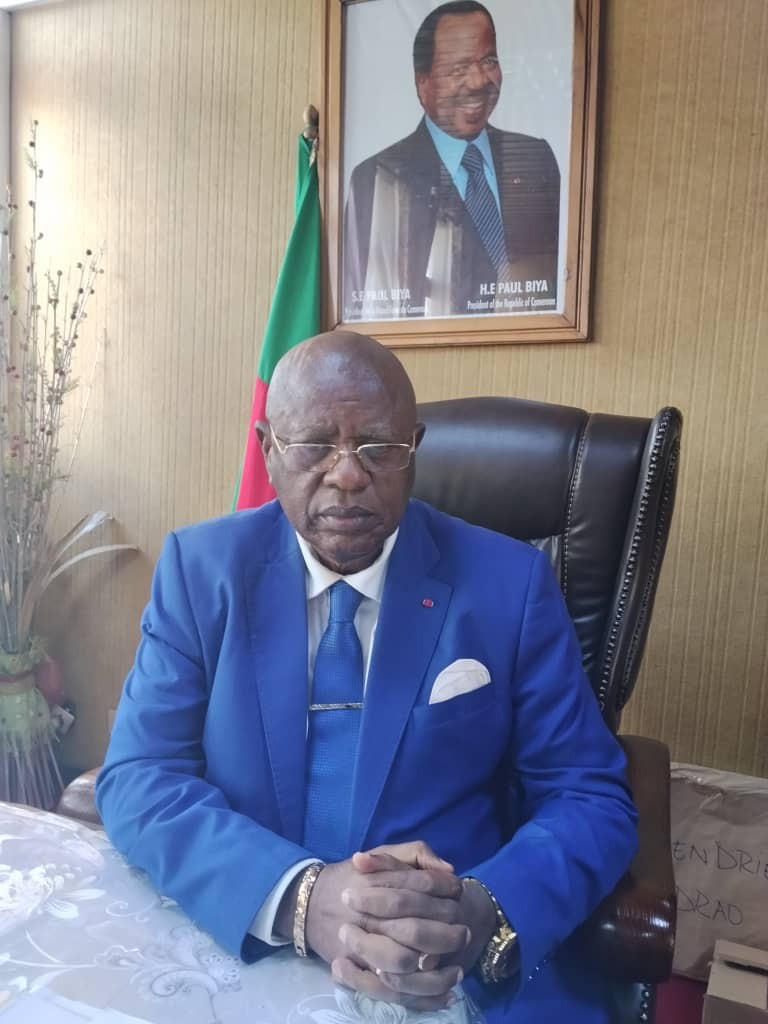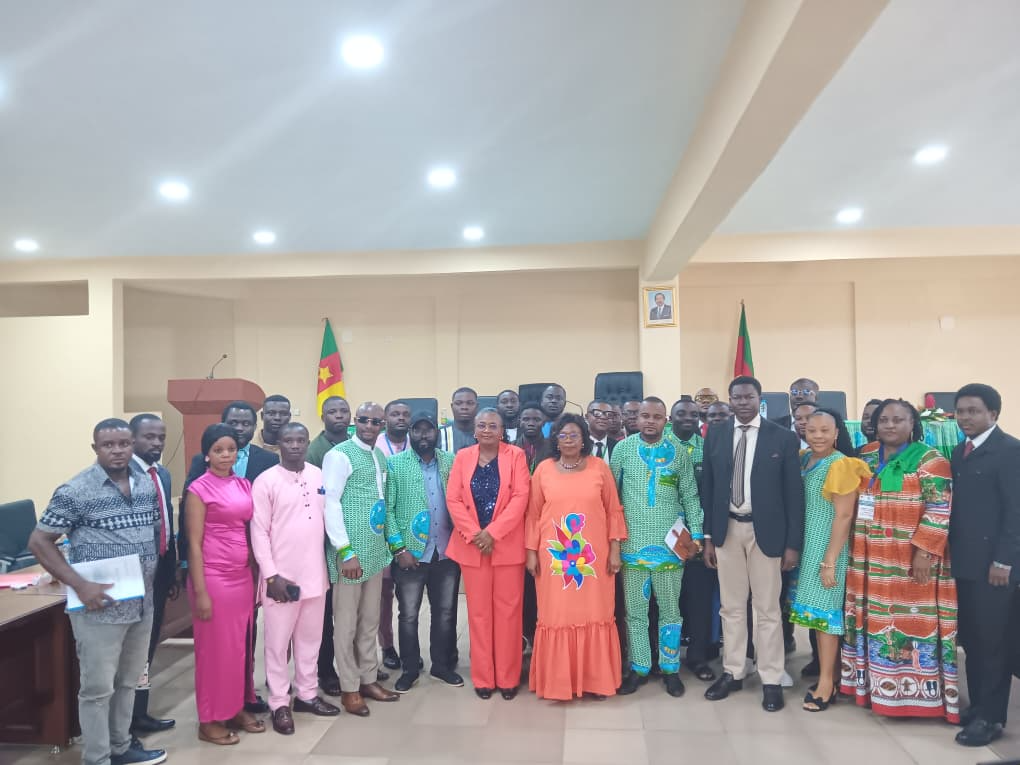
OPIC officials and community-based liaison officers
By Guy-Bruno Maimo
The Office of the Public Independent Conciliator (OPIC) for the South West Region has recorded progress in areas such as water supply, digital civil registration and community infrastructure, while highlighting persistent challenges in sanitation, hygiene, healthcare and access to basic services.
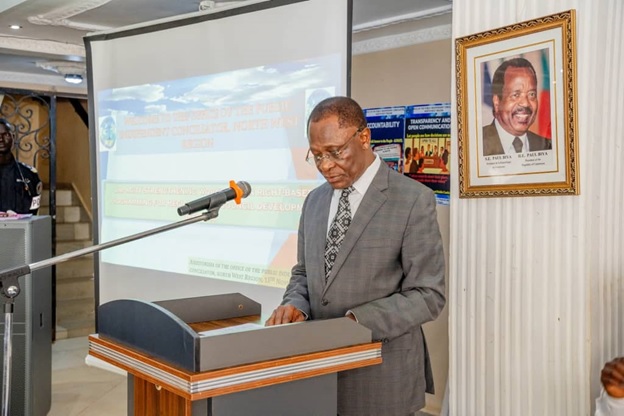
The assessment was made during the quarterly meeting of community-based liaison officers held on Friday, July 24, 2026, at the MINEPAT Hall in Buea, under the theme: “Office of the Public Independent Conciliator: Evaluating the State of Progress of Service Delivery by Regional and Council Administrations through Feedback from Community-Based Liaison Officers.”
The meeting brought together liaison officers from the two city councils and the 31 municipal councils of the region to review the state of public service delivery based on information gathered from communities.
During her welcome address, the Public Independent Conciliator (PIC) for the South West Region, Telelen Dorothy Atabong Motaze, said OPIC’s role goes beyond monitoring hygiene, sanitation and council activities, stressing the importance of obtaining credible grassroots information. “Our focus is not only hygiene and sanitation or what is happening in the councils. We want credible information that we can back ourselves with if the mayors question them,” she told participants, noting that accurate grassroots reports help OPIC engage local authorities and address citizens’ concerns.
Service delivery gains and persistent challenges
Reports presented by liaison officers revealed improvements in some municipalities. In Tiko Municipality, digital birth and death certificate services have been introduced, with more than 15 documents already produced following training. Other gains included water projects, the Ndong Bridge construction and hygiene sensitisation campaigns in Ekondo Titi.
Despite these gains, several challenges continue to affect communities across the region. Liaison officers identified sanitation, waste management, water supply, hygiene and access to healthcare as major concerns.
Among the issues raised were revenue collection difficulties at Mutengene Market in Tiko, limited health resources in parts of Lebialem, poor water supply in Menji, and waste management problems in Kumba II and Kumba III. Some communities also reported difficulties accessing civil status documents and basic services.
PIC encourages digital solutions, better reporting
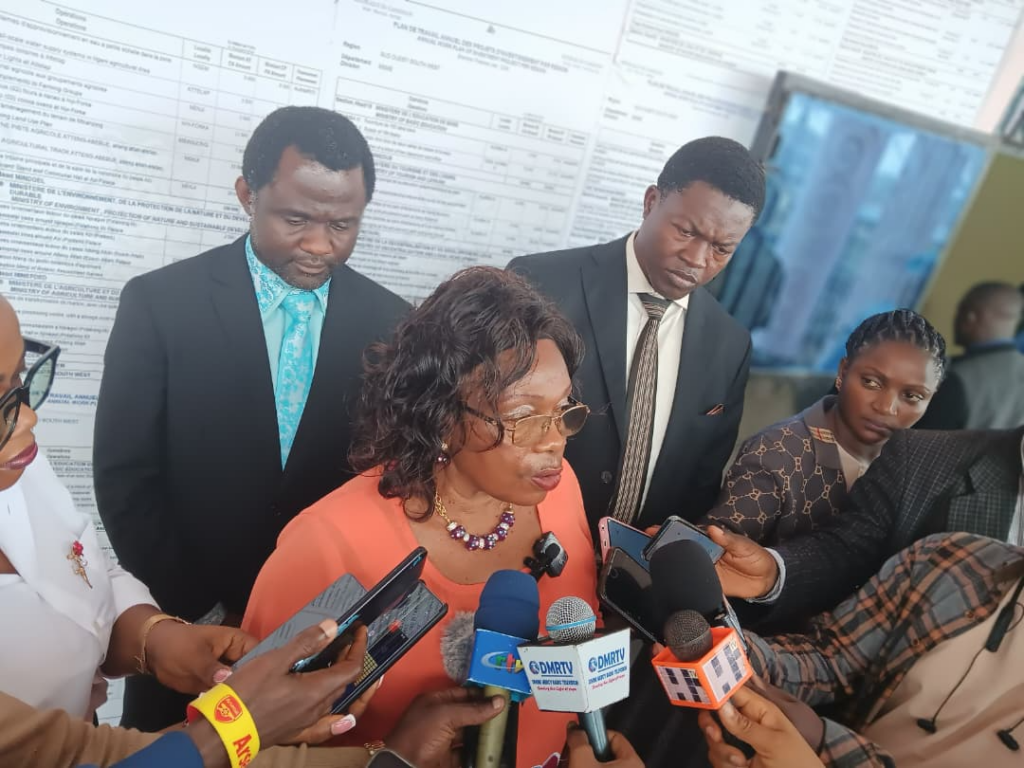
Mrs. Motaze in an interview after the meeting
Responding to the reports, Mrs. Motaze encouraged councils to adopt digital approaches to service delivery, using Tiko Municipality’s digital civil registration system as a model that other councils could replicate. She also condemned improper waste disposal, particularly the dumping of refuse into rivers and surrounding areas, urging communities to play a greater role in protecting the environment.
Reacting to concerns that fell outside OPIC’s jurisdiction during report presentations, Mrs. Motaze reminded liaison officers that the institution operates within a specific mandate, noting that issues such as road challenges fall under the responsibility of other authorities.
In an interview after the meeting, Mrs. Motaze said public service delivery has gradually improved, adding that liaison officers can now distinguish between projects implemented by councils and those of the South West Regional Assembly. “There has been a marked improvement in the delivery of local public services,” she said, citing progress in farm-to-market roads, rural water supply and electrification.
She described the installation of solar panels in Dikome-Balue as an important achievement for remote communities and said the protection of public infrastructure by residents, alongside the return of some mayors to previously inaccessible municipalities, reflects gradual improvement in stability.
Mrs. Motaze added that OPIC would analyse the reports before engaging concerned mayors and relevant institutions to address community concerns, particularly improving access to civil registration services through collaboration with the National Civil Status Registration Office (BUNEC) and municipal authorities.
For Mboe Bertrand Teku Epie, community-based liaison officer for Kumba II Municipality, the meeting reinforced OPIC’s grassroots role in ensuring that citizens’ concerns contribute to local governance. He explained that liaison officers serve as a link between communities and OPIC by monitoring council activities and reporting complaints for possible intervention. He cited poor waste management, inadequate street lighting, municipal police complaints and lack of public trash bins, particularly around Fiango Market.
In her closing remarks, Mrs. Motaze appreciated the participation of liaison officers and urged them to strictly follow OPIC’s reporting format. She stressed that reports must reflect genuine community complaints gathered through proper field visits, while encouraging officers to maintain accuracy, objectivity and focus on issues within OPIC’s mandate.
The meeting ended with renewed commitment from OPIC and community-based liaison officers to strengthen grassroots feedback mechanisms and improve collaboration between citizens and local authorities in enhancing public service delivery across the South West Region. I merged the two versions by keeping the stronger headline, preserving the direct quotes, reducing duplication, and making the article read like a finished newspaper report.