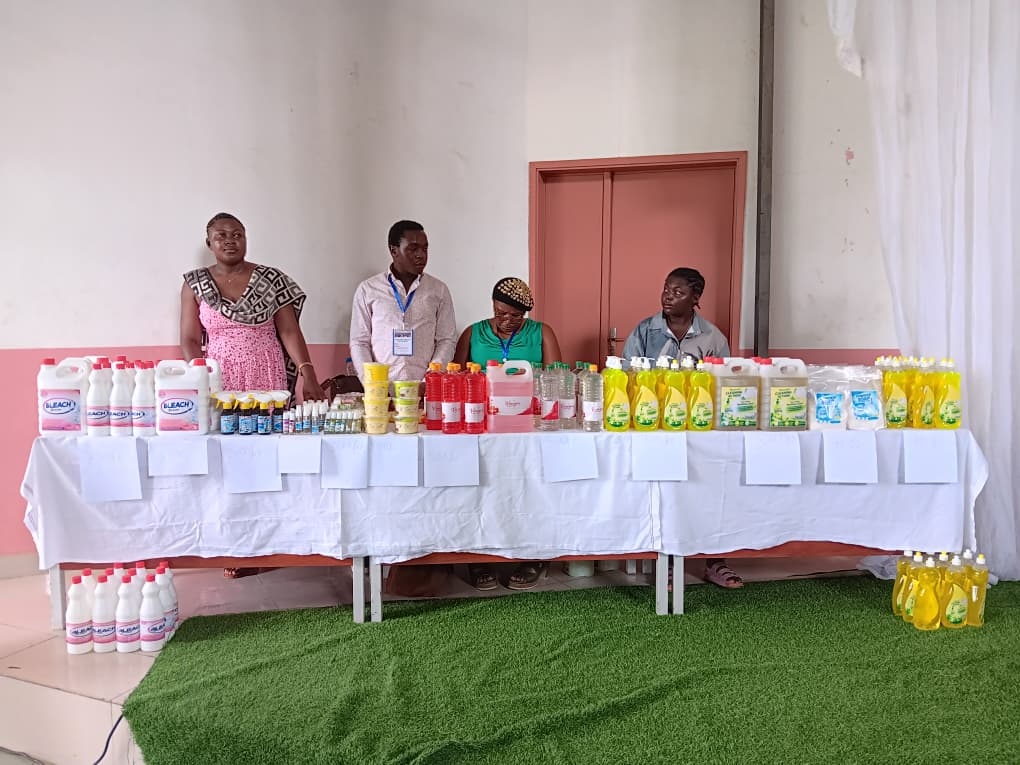
Facilitator and trainees display products from the Toxicology Open Day workshop
By Guy-Bruno Maimo
Toxic substances hidden in everyday products and environmental waste are emerging as a growing public health concern, experts have warned at the Fourth Toxicology Open Day Seminar held at the University of Buea.
The seminar, organised by the Faculty of Health Sciences on April 22, 2026, under the theme “Cosmetics and Health: Toxicology of Municipal Waste,” brought together researchers, health practitioners, lecturers and students to examine the health implications of chemical exposure in daily life. Discussions centred on cosmetics, municipal waste management, and the rising burden of non-communicable diseases linked to environmental toxins.
Opening the event on behalf of the Vice Chancellor, the Deputy Vice Chancellor in charge of Teaching, Professionalisation and ICT Development, Professor Michael Ekonde Sone-Ajang, underscored the importance of integrating toxicology into everyday awareness. He noted that individuals are constantly exposed to potential risks through what they consume, apply on their bodies, and encounter in their surroundings. According to him, the seminar serves both academic and public health purposes by strengthening student understanding of environmental exposure.
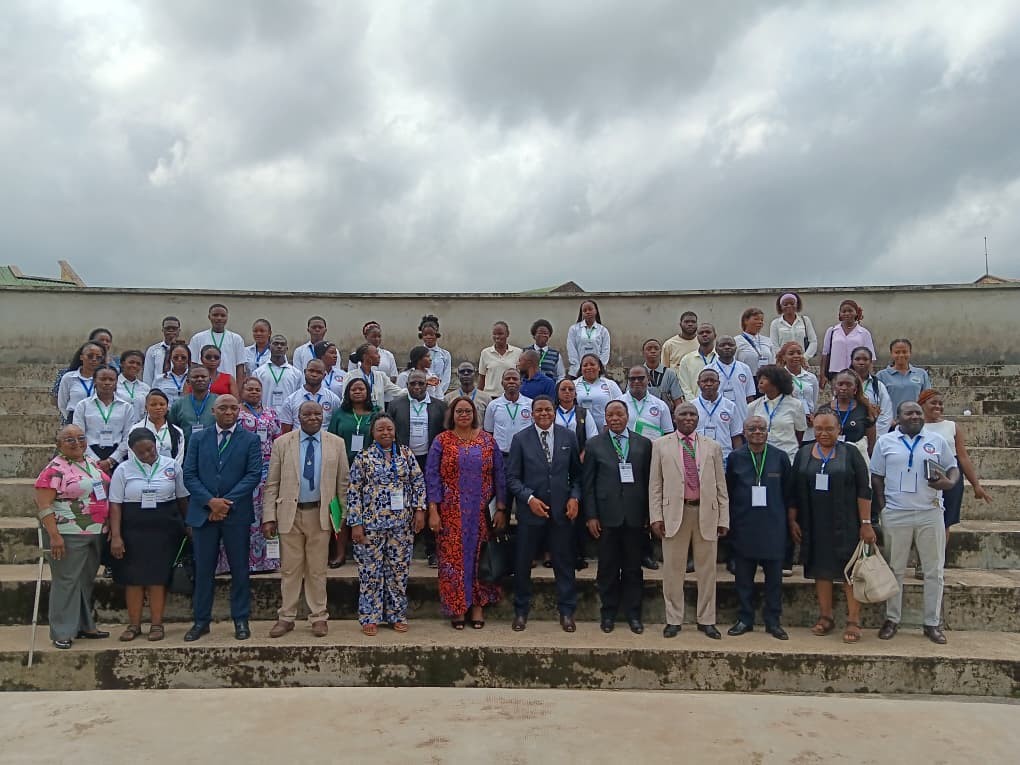
Organising committee and faculty leadership during the Toxicology Open Day
“It will go a long way to increase their knowledge base and raise awareness on what we consume and apply on our bodies,” he said, encouraging students to treat toxicology as part of daily life rather than a purely theoretical discipline.
A key highlight of the seminar was a presentation on “Cosmetics and Health” delivered by Professor Asongalem Emmanuel Acha, President of the Cameroon Society of Toxicological Sciences, CSTS. He cautioned that many widely used personal care and beauty products may contain hazardous chemicals capable of causing long-term health complications.
He listed substances such as parabens, synthetic fragrances, heavy metals and formaldehyde-releasing agents, which he said have been associated with cancer, hormonal imbalances, neurological disorders and organ damage. He stressed that the effects are often cumulative and may take years to manifest.
“The effects are not immediate. You may only see them 10 to 15 years later,” he warned, urging consumers to pay closer attention to product ingredients rather than focusing on scent or packaging.
Professor Asongalem noted that CSTS, founded in 2006, has become a key national platform for toxicology awareness, resuming active programming in 2023 after disruptions linked to the socio-political crisis. He also highlighted ongoing progress in toxicology training at the University of Buea, including postgraduate programmes and efforts toward establishing a national poison control centre.
Health experts at the seminar further linked chemical exposure to the increasing incidence of non-communicable diseases such as cancer and kidney-related illnesses, stressing prevention through education and awareness.
Representing the Dean of the Faculty of Health Sciences, Vice Dean Professor Nsagha Dickson Shey said the subject is critical to public health, noting that several chemicals present in cosmetics and the environment are carcinogenic.
“We need to know what makes people sick so we can advise and sensitize them,” he said, adding that the faculty is strengthening postgraduate training in toxicology and pharmacology through international partnerships aimed at addressing emerging health challenges. The CSTS also reiterated its advocacy for the establishment of a national poison control centre to improve emergency response to toxic exposure cases.
Beyond academic discussions, the seminar also featured a practical empowerment component through a student training initiative aimed at promoting financial independence via the production of household goods. A one-day workshop held on April 18, 2026, trained 20 students in the production and marketing of items such as perfumes, liquid soap, powdered soap, insecticides, vinegar and sea salt, while also equipping them with skills in packaging, branding and commercialisation, with organisers noting that some participants have already begun generating income from earlier training cycles.
The seminar concluded with a call for stronger collaboration between academic institutions, government bodies and health professionals to improve regulation, raise public awareness and reduce toxic exposure risks. For participants, the overarching message was clear: while many dangers remain invisible, they can be prevented through knowledge, regulation and informed choices.