By Guy-Bruno Maimo
The Office of the Public Independent Conciliator (OPIC) in Cameroon’s South-West Region has released its 2025 Annual Administrative Report, providing key insights into citizen–administration relations. The event drew regional authorities, municipal officials, civil society actors, and media representatives, emphasizing the importance of dialogue, transparency, and accountability in governance.
The report was officially presented on 11 March 2026 at the Institution’s Esplanade, where Mme Telelen Dorothy Atabong, Public Independent Conciliator for the South-West Region, stressed the significance of the exercise:
“Even if this exercise may seem like a mere formality to many, the publication of the annual report of this office is an official exigency. It is an opportunity to highlight citizen concerns and ensure that municipal authorities are held accountable, so that service delivery can be more effective, especially in municipalities regaining normalcy.”
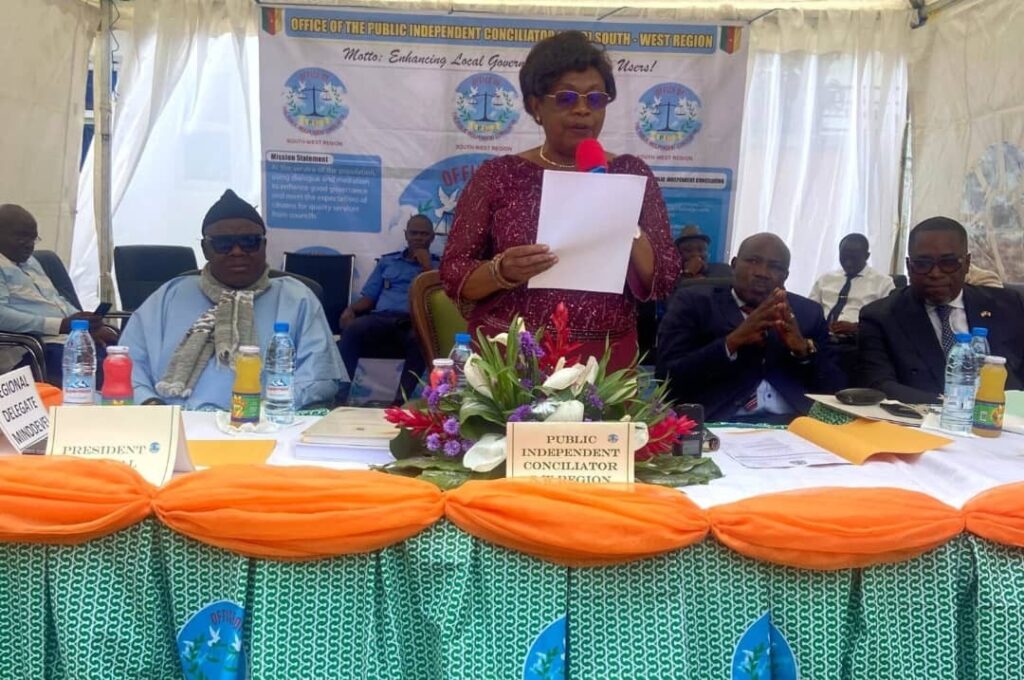
Mrs. Telelen Dorothy Atabong Motaze, speaking in Buea
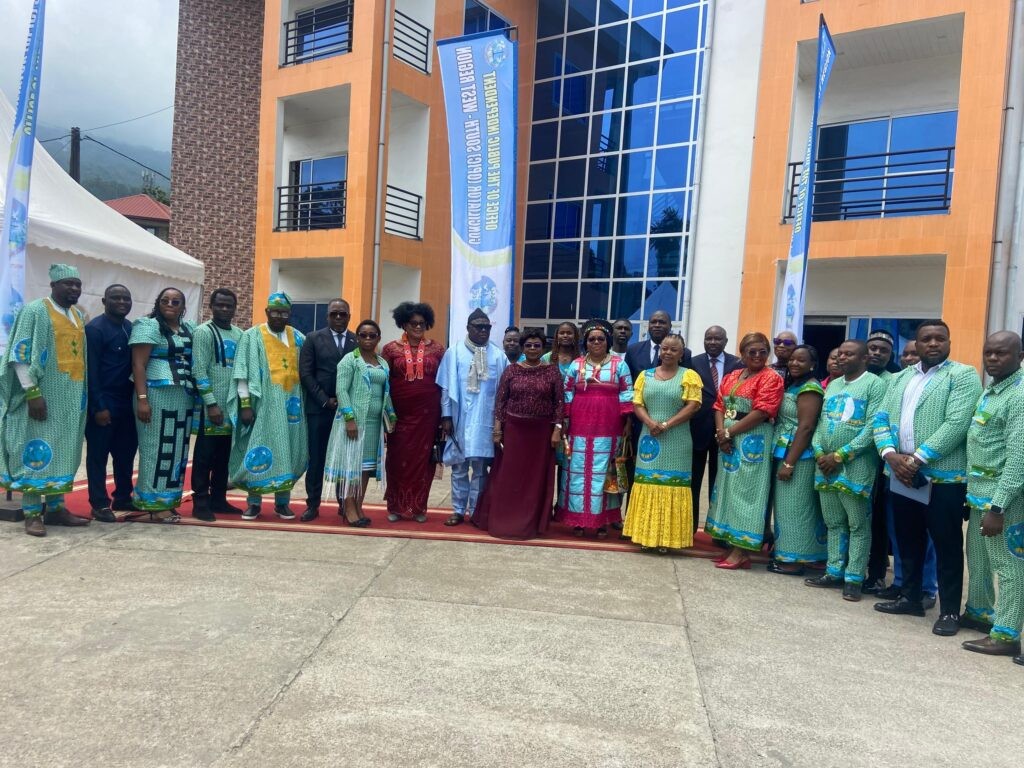
Mme Atabong also acknowledged the presence of dignitaries, including the President of the Southwest House of Chiefs, regional and local mayors, civil society representatives, and other stakeholders, noting their commitment to supporting the Office’s mission.
The report provides a nuanced assessment of local governance. While citizens expressed satisfaction with services such as the issuance of civil status documents, management of motor parks, allocation of market spaces, and processing of building permits, challenges persist in areas like waste management, sanitation, and delayed payments to service providers.
Addressing these challenges during an interview, Mme Atabong said: “Hygiene and sanitation have been a major concern because of total neglect. Citizens continue to struggle with access to clean water, poorly executed boreholes, and the lack of follow-up when problems arise. Farmers also face difficulties as their produce often perishes due to poor road access, and they are calling on the state to improve the farm-to-market routes.”
The report highlights disparities in administrative efficiency, showing that municipalities in relatively secure urban areas operate at nearly 80% capacity. In contrast, more remote or insecure municipalities continue to face operational constraints that affect service delivery and citizen satisfaction.
Mme Atabong emphasized the positive impact of the report on governance: “Each time we highlight citizen concerns and municipal authorities respond, it enhances cordiality. Citizens begin to acknowledge that the Office of the Public Independent Conciliator may influence mayors who are working to improve service delivery and living conditions in municipalities.”
The event also served as a platform for dialogue among citizens, local authorities, and the media, reinforcing OPIC’s mandate as a mediator and oversight institution. By showcasing both achievements and areas requiring improvement, the 2025 report offers a roadmap for strengthening public service delivery, promoting accountability, and enhancing citizen government relations in the South-West Region.
As the region consolidates peace and restores administrative normalcy, the Office of the Public Independent Conciliator remains a key mechanism for building trust, transparency, and participatory governance, ensuring citizen voices guide public service improvements.