By Nformi Ngi Jones Tamfu
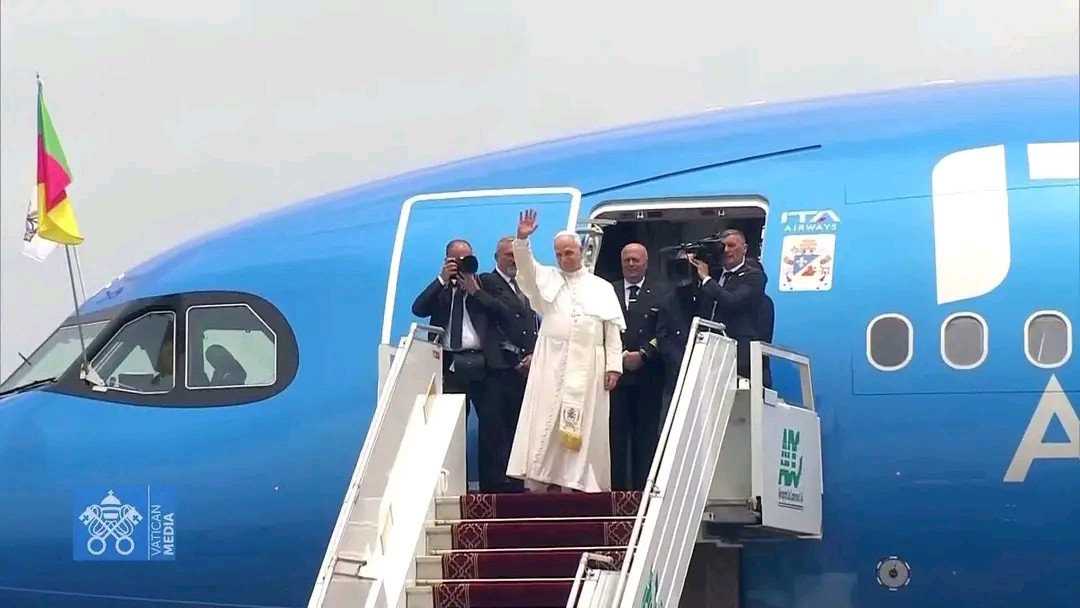
The white smoke of the papal visit has cleared, leaving behind a nation caught between the euphoria of a spiritual awakening and the cold reality of its long-standing challenges. After a grueling three-day mission across Yaounde, Bamenda, and Douala, the Pope has departed, leaving his final blessing: a resonant, urgent call for peace in Cameroon’s conflict-torn regions.
The visit was more than a religious event; it was a facelift for Cameroon. In the weeks leading up to his arrival, cities and neighbourhoods in Cameroon underwent a metamorphosis. Roads were paved, neighborhoods were scrubbed clean, and for a brief moment, the government enjoyed a rare surge in public approval. But as the Pope’s plane disappeared into the clouds, the primary question on the lips of every Cameroonian remained: What happens next?
In the bustling markets of Douala and the quiet streets of Yaounde, there is a palpable anxiety regarding the “cleanliness of convenience.” Citizens are questioning whether the newfound tidiness of their neighborhoods was merely a performance for the Holy See.
“We saw roads fixed in days that had been broken for years,” said one local resident. “Will the maintenance continue, or will the potholes return now that the cameras are gone?” Beyond the aesthetics, the fate of several pending development projects linked to the visit hangs in the balance, testing the government’s commitment to lasting infrastructure.
The Pope’s message was not merely spiritual; it was deeply political. Denouncing corruption and injustice, he steered his message toward the heart of the suffering of Cameroonians and the separatist conflict.
In Bamenda, the message hit closest to home. The Pope declared that the time for reconciliation is “now,” not some distant future. This has placed the ball firmly in the court of both the government and separatist factions. The nation is now watching to see if the authorities will move beyond rhetoric and engage in the “substantial dialogue” required to silence the guns.
Archbishop Andrew Nkea of Bamenda, President of Cameroon’s Episcopal Conference, warns against the “event-only” mindset.
“When the Pope comes to a place, it is an event,” Archbishop Nkea told Vatican Media. “However, the significance is diminished if we do not reflect on its aftermath. It is imperative that we explore the means necessary for implementation.”
To ensure the Pope’s words don’t disappear into “mere rhetoric,” the Archbishop is calling for the formation of local committees. These groups would be tasked with: Developing practical strategies for peace, Fostering dialogue between armed groups and the state and Holding authorities accountable for the fight against corruption.
The Pope has provided the spark, but the fire of reform must be tended by Cameroonians themselves. Whether it is the ordinary citizen refusing to participate in bribery or the high-ranking official choosing justice over personal gain, the “Post-Papal Era” will be defined by action and not just prayer.