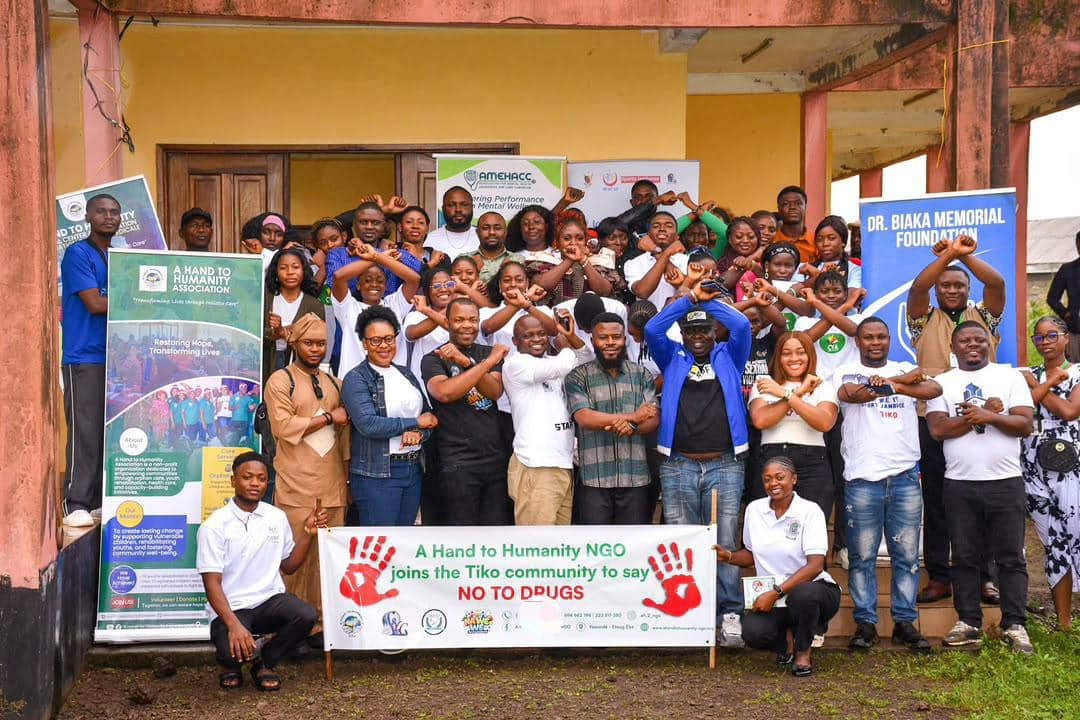
Participants after the drug abuse awareness workshop in Tiko
By Guy-Bruno Maimo
A strong wave of advocacy, testimony, and community mobilisation marked a major drug abuse awareness outreach held in Tiko under the coordination of A Hand to Human NGO, bringing together government institutions, civil society organisations, youth groups, religious leaders, health professionals, and international speakers in a united call for prevention and recovery.
Held at the Tiko Youth Multipurpose Centre, the one-day sensitisation workshop, which took place on Friday, July 3, 2026, operated under the theme “Engaging Parents & Children in the Fight Against Drug Abuse.” It was organised in collaboration with the General Delegation for National Security (DGS), the Ministry of Public Health (MINSANTE), the Ministry of Youth Affairs and Civic Education (MINJEC), and several civil society organisations, including Local Youth Corner Cameroon (LOYOC) and the Roots of Freedom Initiative.
Speakers at the event repeatedly stressed that drug abuse should not be viewed only through a criminal lens, but as a public health and social challenge requiring collective and sustained intervention, with health professionals and psychologists present underscoring the importance of early intervention, counselling, and rehabilitation services, urging families to refer affected individuals to qualified mental health practitioners rather than resorting to punishment or rejection.
Community-based rehabilitation approaches were strongly encouraged, with participants noting that recovery is most effective when families, schools, religious institutions, and healthcare providers work in synergy.
A significant portion of the discussions focused on the role of parents in shaping children’s behaviour and vulnerability to substance use. Speakers observed that many young people are drawn into drug use due to a combination of factors, including family neglect, poor communication, domestic conflict, peer pressure, academic stress, and emotional trauma. As a respond to that, parents were urged to strengthen emotional bonds with their children by creating time for them, encouraging open dialogue, and building safe spaces for expression.
The workshop also emphasised the need to move beyond awareness campaigns by prioritising skills development and economic empowerment for recovering addicts. Organisers recommended vocational training, entrepreneurship support, and job creation as key strategies to reduce relapse, noting that idleness remains a major risk factor in substance dependence, while technical and vocational education was highlighted as a long-term pathway for youth empowerment and self-reliance. The message was reinforced through powerful testimonies from former drug users and international speakers who shared their personal recovery journeys, making their stories one of the most memorable moments of the outreach.
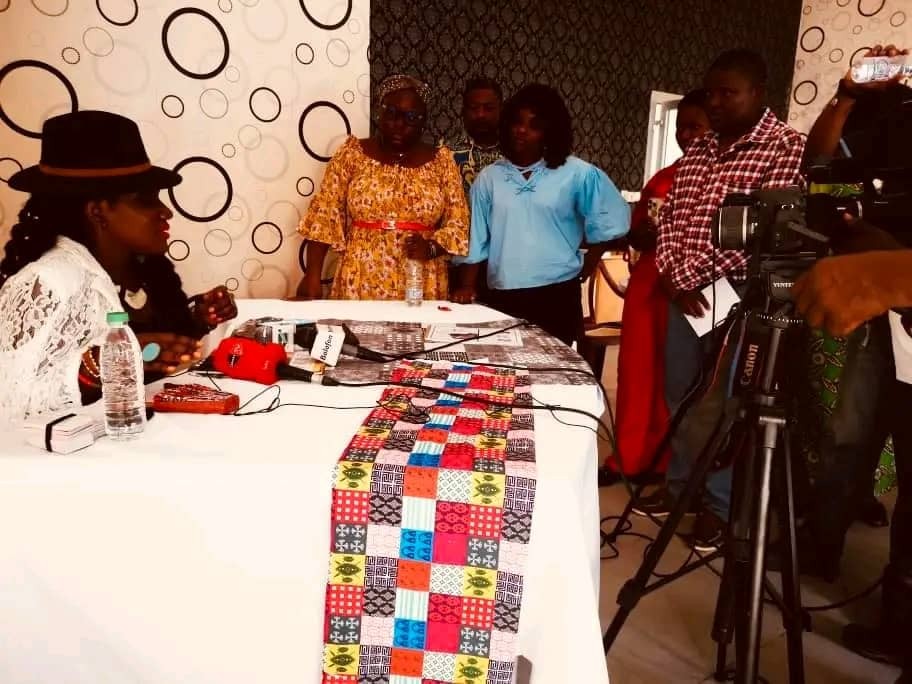
Among the speakers was American media architect Joshua T. Berglan, who candidly recounted his past battles with trauma, addiction, and multiple incarcerations. Emphasizing how faith and rehabilitation transformed his life, actively challenging the youth in attendance to confront their emotional pain by seeking support instead of turning to substance abuse.
Sharing a local perspective, Mutengene’s Ndip Ndip Simon, described addiction as a destructive byproduct of peer pressure, emotional struggles, and grief, noting that it took 100 days of unwavering dedication to liberate himself from chemical dependency. Echoing this need for a supportive environment, Prime Service Cameroon CEO, Madam Melbel Etonge called for an immediate paradigm shift away from social stigma, stressing that recovery hinges on community acceptance rather than rejection. Etonge championed the creation of safe havens for vital psychiatric counseling and rehabilitation, warning that societal isolation directly compounds vulnerability and frequently triggers a return to drug dependence.
Organisers from A Hand to Human NGO and partner institutions underscored the importance of collaboration between government agencies, NGOs, and community actors in addressing the drug crisis, agreeing that no single institution can tackle drug abuse alone, calling instead for sustained multi-sector cooperation and coordinated action.
The outreach ended with a strong consensus that drug abuse is not only a personal struggle, but a collective responsibility requiring prevention, treatment, and reintegration, calling for sustained awareness campaigns, stronger parental involvement, expanded rehabilitation services, and increased youth empowerment programmes as critical steps toward building a healthier, drug-free society. As testimonies echoed through the hall, one message remained clear: recovery is possible, prevention is powerful, and community action is essential.