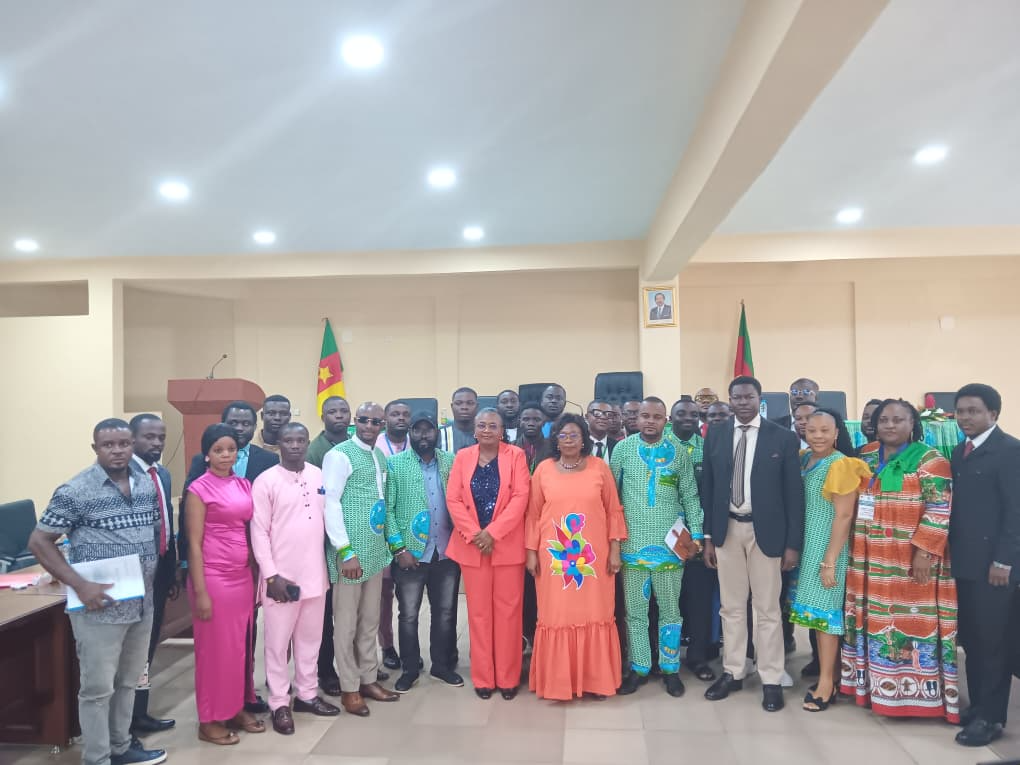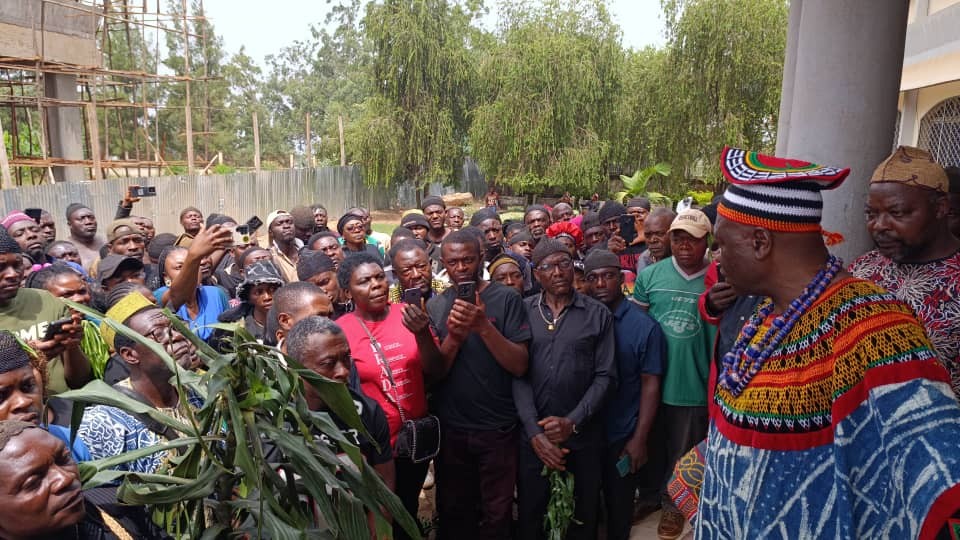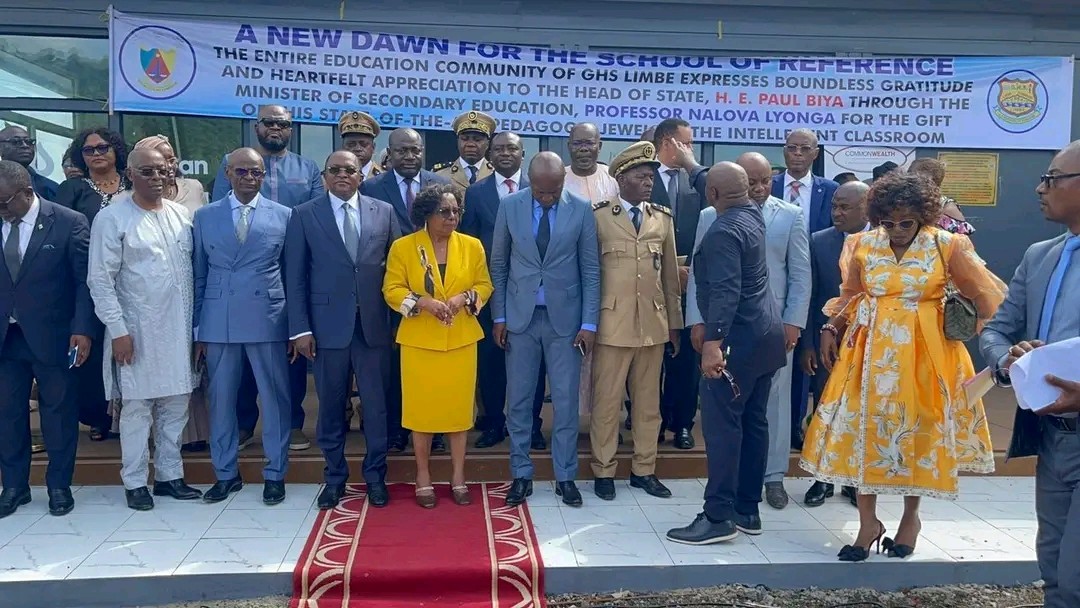
Officials and education stakeholders at the inauguration ceremony
By Guy-Bruno Maimo
Education in Cameroon’s South West Region has taken a decisive step into the future following the official inauguration of an “Intelligent Classroom” at Government High School Limbe, marking the country’s second deployment of the innovative learning facility under its national digital education transformation agenda.
The ceremony, held on Friday, May 8, 2026, was presided over by the Minister of Secondary Education, Nalova Lyonga, bringing together administrative authorities, education stakeholders, development partners, and students of Government High School Limbe.
The Intelligent Classroom forms part of a broader national programme spearheaded by the Ministry of Secondary Education Cameroon in collaboration with the Commonwealth of Nations and British educational technology firm Promethean. The initiative seeks to modernize teaching and learning through digital tools, interactive platforms, and artificial intelligence-driven education systems.
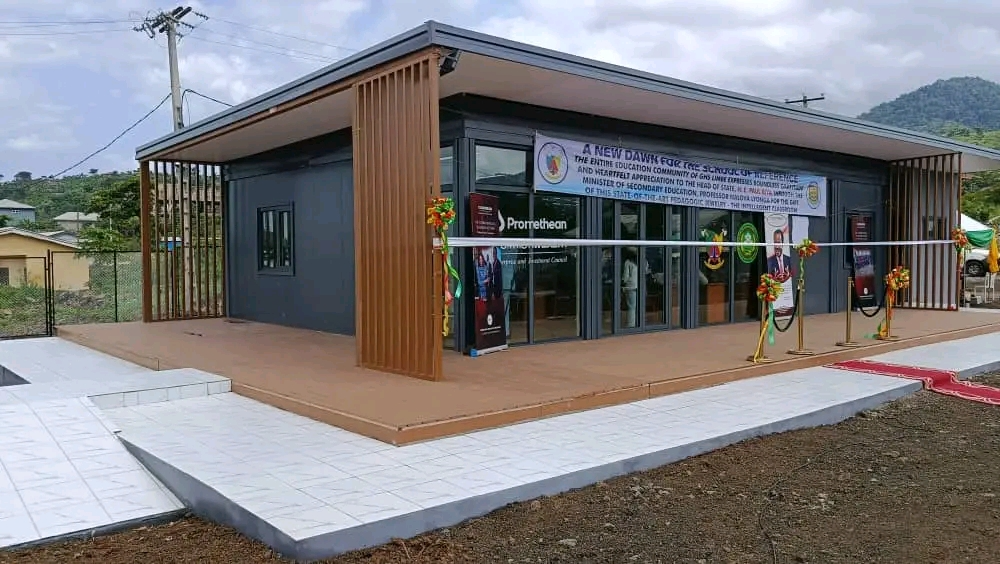
The Intelligent Classroom at GHS Limbe
The Limbe launch follows the first Intelligent Classroom inaugurated on March 3, 2026 at Lycée Général Leclerc by Prime Minister Joseph Dion Ngute, in what officials described as a landmark step in Cameroon’s education digitization drive. The model is expected to be progressively extended to other regions across the country as part of a nationwide rollout strategy.
During the Limbe ceremony, students witnessed live demonstrations of digital learning tools, showcasing interactive teaching methods designed to improve engagement, comprehension, and access to quality education. The facility integrates multimedia systems that allow lessons to be delivered through smart boards and real-time digital collaboration.
The classroom is also equipped with autonomous infrastructure, including solar energy systems and independent utilities, enabling it to function even in areas without stable electricity or internet connectivity. This design aligns with national efforts to bridge the digital divide between urban and rural schools.
In an interview, Minister Nalova Lyonga stressed that the Intelligent Classroom is not intended to replace teachers but to enhance their effectiveness and modernize pedagogical delivery, cautioning that digital literacy has become indispensable in today’s world: “This has not come to replace those who are teaching. It has come to enhance the skills of those who are teaching. Anybody who doesn’t know AI or computers in the future is going to be replaced by someone who knows it. So knowing it is a must,” she said, underscoring the importance of preparing Cameroonian learners for global technological shifts driven by artificial intelligence, robotics, and digital innovation.
The Minister also revealed that the initiative is designed for nationwide expansion, emphasizing the importance of inclusive implementation across both English and French speaking regions to ensure equal access to digital education, with regional authorities already expressing interest in similar installations across other divisions.
She added that technology must also serve as a bridge between innovation and cultural preservation: “We have a heritage and we must keep the heritage and use AI to perfect and protect it, making the next generation know who they are.”
The Intelligent Classroom initiative is anchored within Cameroon’s National Development Strategy (NDS30), which prioritizes digital transformation as a pillar of education reform and economic modernization. It is also part of a broader shift toward AI-driven learning, digital school management systems, and expanded access to distance education nationwide.
From chalkboards to smart boards, Cameroon’s classrooms are gradually evolving. While challenges remain in scaling infrastructure nationwide, the Limbe inauguration reinforces a clear policy direction: digital education is no longer optional: it is the future.