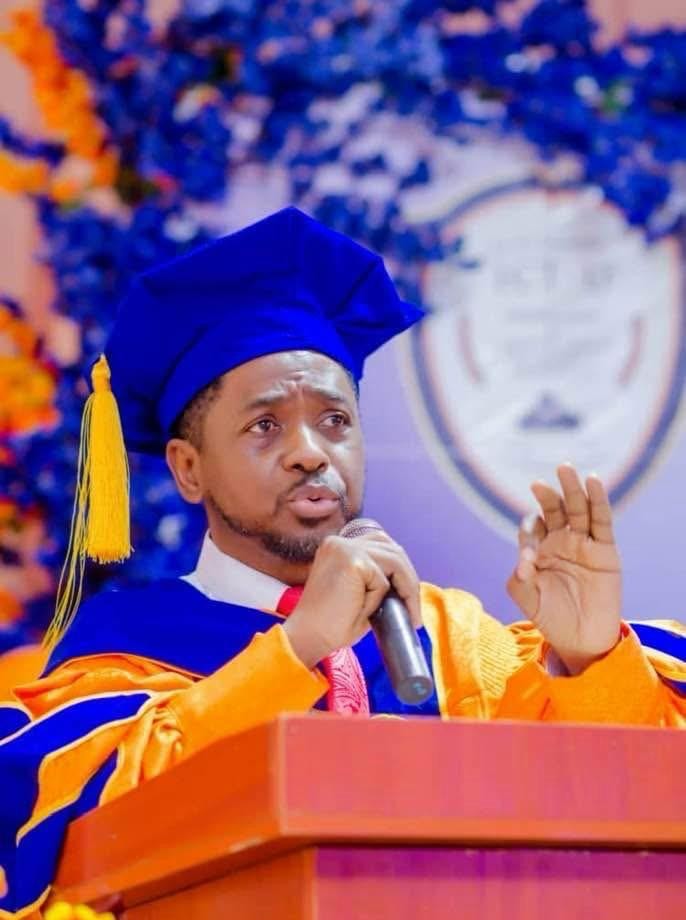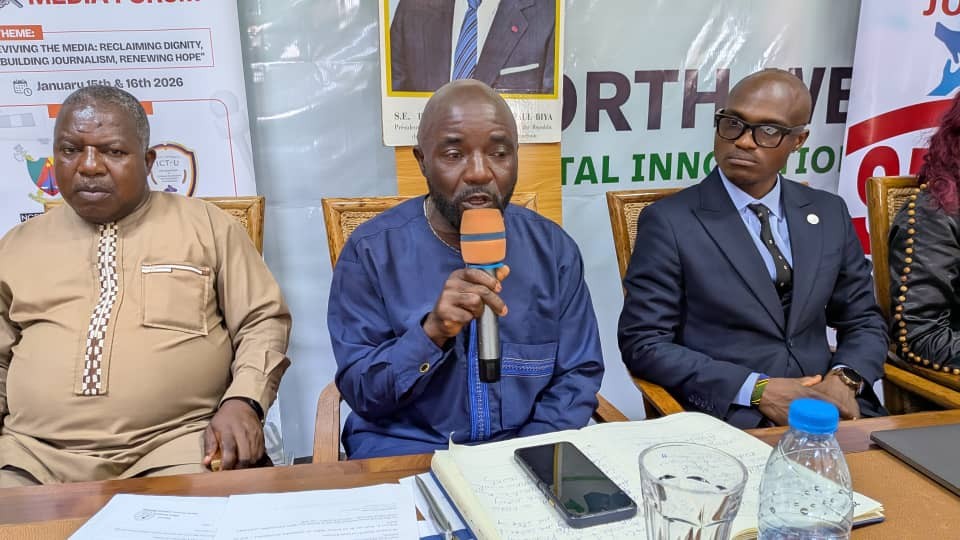
Njike Celestine: NW Regional Delegate for Communication addressing journalists on WPFD
By Neba Jerome Ambe
On May 3, 2026, Journalists in Cameroon’s North West Region have been called upon to recommit themselves to ethical, courageous, and responsible reporting, even as they operate under some of the most difficult professional and security conditions in the country.
The call was made during commemorative activities marking World Press Freedom Day 2026, where media practitioners, government representatives, and communication stakeholders gathered in Bamenda to reflect on the state of press freedom and the challenges facing the profession.
Delivering a strongly-worded address, the President of the Cameroon Association of English Speaking Journalists (CAMASEJ Bamenda Chapter), Sah Terence Animbom, described journalism in the region as both a duty and a burden carried under extreme pressure.
He acknowledged the daily risks faced by reporters working in the North West, particularly in the context of armed conflict, displacement, and widespread insecurity. According to him, journalists have continued to report from communities affected by violence, institutional fragility, and humanitarian distress, often at great personal risk.
“I know the checkpoints, the fear, the hesitation before making a call, and the trembling hands behind a filed story,” he said, urging journalists to continue pursuing the truth despite adversity. However, he was quick to caution that safety must remain a priority. “No story is worth your life. No scoop is worth your freedom,” he added.
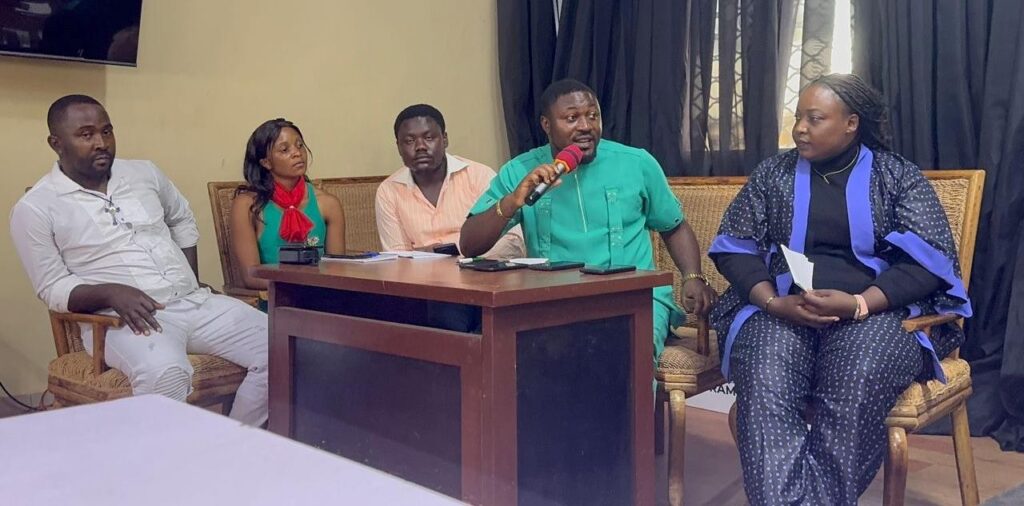
Members of a panel discussion on the theme of the WPFD
Animbom also drew attention to what he described as a deepening crisis in the media industry, pointing to poor working conditions, unpaid salaries, and lack of formal employment structures. He noted that approximately 80 percent of journalists in the private media sector operate without contracts, while some have gone for over 25 months without pay.
He warned that economic vulnerability was becoming a silent but powerful threat to press freedom. “A journalist who cannot feed their family is a journalist vulnerable to compromise,” he stated, calling for urgent reforms to improve the welfare and security of media practitioners.
He further highlighted outcomes from the maiden North West Media Forum held earlier this year, describing it as a “declaration of resistance” against systemic neglect of journalists’ welfare. He urged media professionals to push for the implementation of its recommendations as a pathway to sustainable reform.
In his closing remarks, Animbom aligned his message with that of international advocacy for press freedom, referencing global calls for the protection of journalists as essential to democracy, human rights, and peace. He encouraged journalists to continue reporting in the face of conflict, censorship, intimidation, disinformation, and political pressure.
“Tell the truth anyway, carefully, responsibly, and with your safety in mind. But tell it,” he emphasized.
Also addressing the gathering, the Regional Delegate of Communication for the North West, Njike Celestine, called on journalists to strengthen professionalism and ethical standards in their work.
He noted that World Press Freedom Day should serve not only as a celebration but also as a moment of reflection on the responsibility of journalists in shaping public discourse.
He urged media practitioners to prioritize accuracy, balance, and credibility, stressing that press freedom must be exercised alongside responsibility. especially in a context where misinformation spreads rapidly.
Njike Celestine also commended journalists in the region for their continued coverage of key events, including socio-political and religious activities, often under difficult conditions. He encouraged them to remain committed to fostering peace, unity, and social cohesion through their reporting.
The event brought together stakeholders from various media institutions, including representatives from state media houses such as CRTV North West and SOPECAM, as well as other communication actors and journalists operating in the region.
World Press Freedom Day is observed globally every May 3, serving as a reminder of the importance of free, independent, and pluralistic media in democratic societies.