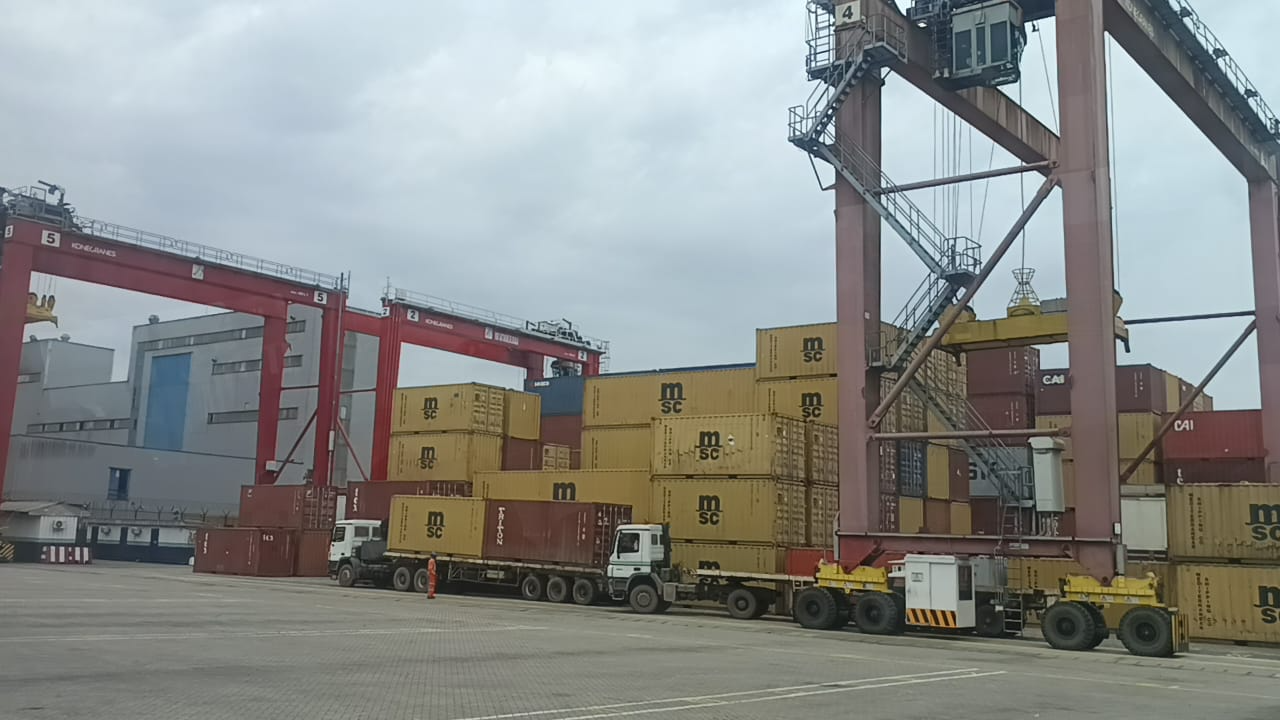
Douala port Container Terminal
By Nformi Ngi Jones Tamfu
On April 23, a high-level delegation of journalists toured the Port of Douala-Bonaberi, uncovering a maritime facility in the midst of a historic metamorphosis. What was once a congested bottleneck is rapidly evolving into a modern logistics powerhouse, fueled by strategic expansion and a radical shift in management philosophy.
The three-hour exploratory visit, which took media representatives from the high-tech Douala Port Security (DPS) auditorium to the dusty, bustling expansion sites of Quay BOSCAM, highlighted the Port Authority of Douala’s (PAD) aggressive strategy to reclaim its status as the premier gateway for Central Africa.
The transformation is largely credited to the strategic leadership of General Manager Cyrus Ngo’o. Under his stewardship, the promise made by President Paul Biya in 2011 to make the port of Douala a port of reference in the Gulf of Guinea has finally taken physical shape.
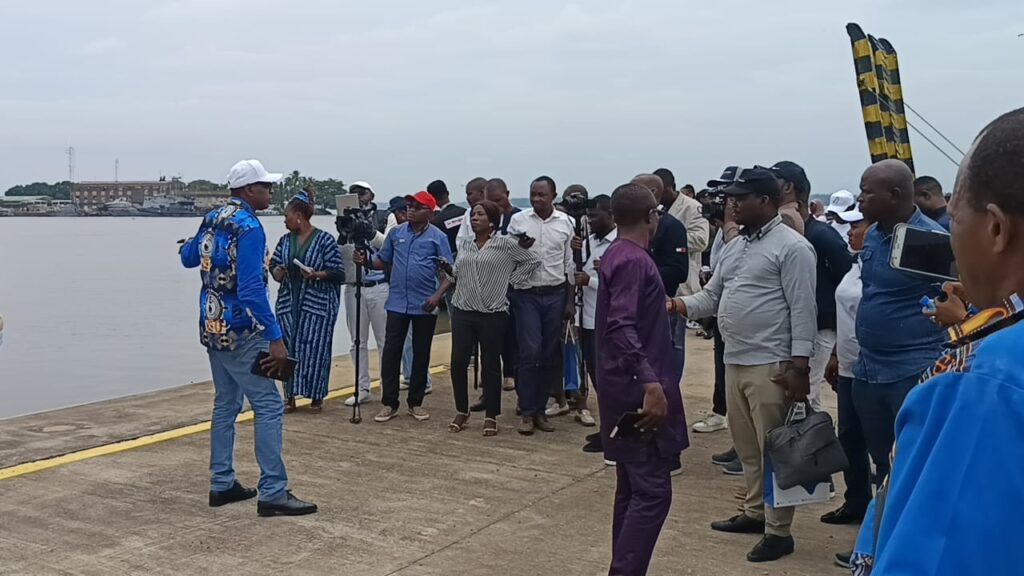
Journalists receiving lectures on Douala-Bonaberi port’s transformation
Rather than relying on strained government coffers, Ngo’o has leveraged the Public-Private Partnership (PPP) model. This “Build-Operate-Transfer” approach allows private investors to fund and construct infrastructure, with the PAD reaping financial dividends and eventually inheriting the assets.
Furthermore, the “internalization” of services has saved billions. The Dredging Unit, once a massive drain on resources costing over 15 billion CFA francs, now operates on only 4 billion CFA francs, with targets to drop that figure to 3 billion.
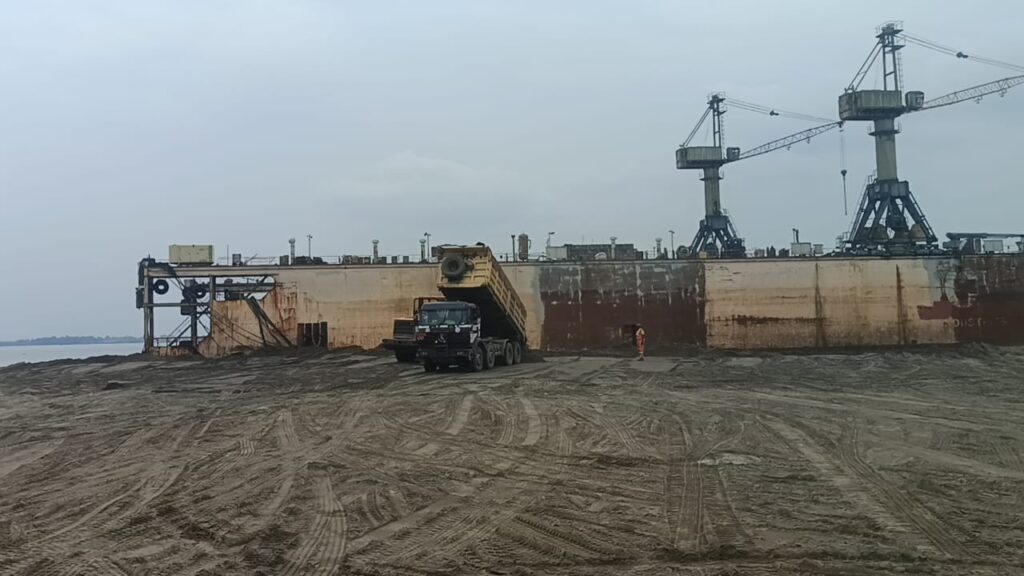
Rehabilitation works underway at the Port of Douala-Bonaberi
The delegation visited several critical zones where rehabilitation is currently in full swing:
Berth 17 Extension: Journalists expressed shock at the construction pace of this new quay, which was described as a “No Man’s Land” only months ago.
The Container Terminal: Now boasting a capacity to unload 25 containers per hour (up from 12), the terminal has seen a massive spike in operational efficiency.
Logistics & Roads: Over 10km of new bypass roads are transforming the Essengue area, while a massive 31,000-square-meter truck park is being expanded to 50,000 square meters to eliminate traffic gridlock.
BOSCAM Quay: Efforts are underway to remove fifty shipwrecks that have long hindered regional trade at this vital terminal.
The data presented by Mr. Raoul Simplice Minlo, Chief of Communication, paints a picture of explosive growth between 2020 and 2025:
The data regarding vessel traffic underscores the impact of these advancements. The number of vessels calling at the port increased from 2,475 in 2020 to 2,842 in 2025, marking a commendable growth rate of 3%. Furthermore, the port’s transit traffic soared dramatically from 866,060 tonnes in 2020 to an impressive 1,967,214 tonnes in 2025, achieving a remarkable increase of 15%. Simultaneously, the volume of cargo unloaded at the port escalated from 516,367 tonnes in 2020 to 1,473,426 tonnes in 2025, translating to an astounding 25% growth. Operational efficiency has also improved significantly, with the port now able to unload 25 containers per hour, a notable increase from the previous capacity of 20 containers per hour.
In 2025, the Port of Douala-Bonaberi reported a total traffic volume of 13 million tonnes, generating a turnover of 90 billion CFA francs, a substantial rise from 43 billion CFA francs in 2020. This growth not only underscores the port’s critical role in the regional economy but also its contribution to employment, providing approximately 7% of jobs in Douala and 2% throughout Cameroon. The port’s impact extends far beyond the water’s edge. In 2025, the facility handled 13 million tonnes of traffic, cementing its role as an economic engine that provides 7% of all jobs in Douala and 2% of employment nationwide.
As the expansion toward Misole I in the Dibamba progresses, the port is set to further ease the flow of goods to landlocked neighbours like Chad and the Central African Republic, securing Cameroon’s position as the heartbeat of regional trade.