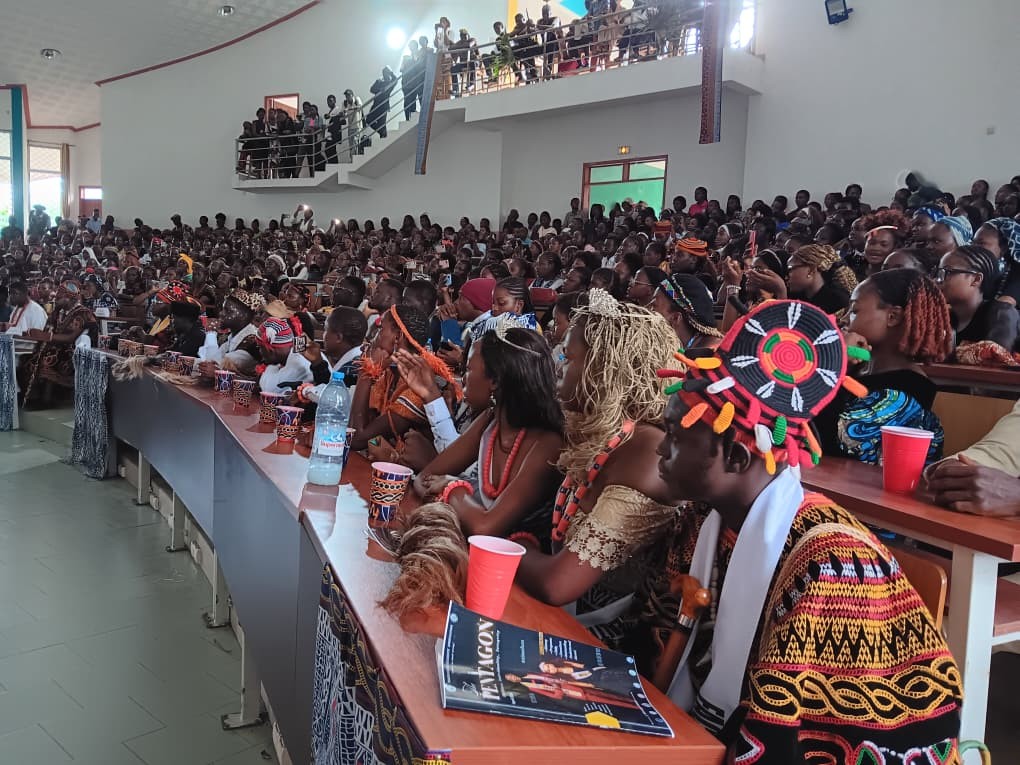
Cross sectional picture of students in attendance
By Guy-Bruno Maimo
The Faculty of Health Sciences, FHS, at the University of Buea has marked a defining moment in its student life with the launch of its first-ever pioneer magazine during the 5th edition of its Cultural Week celebration, an event that blended tradition, creativity, environmental awareness, and student unity.
Speaking after the event, the President of the Health Sciences Students’ Association, HESSA, Tabe Michael Arrey, described Cultural Week as the faculty’s biggest student-driven event, noting its growth and impact over the years. He explained that the week-long celebration, which ran from April 21 to 25, brought together students, alumni, lecturers, and even participants from outside the faculty in a vibrant display of cultural pride and academic solidarity: “cultural Week is our biggest student-driven platform where we celebrate identity, creativity, and unity beyond the classroom,” he said.
He traced the origins of the initiative to the Department of Medicine before it expanded into a faculty-wide tradition under past leadership. According to him, the event has evolved into a platform that not only celebrates diversity but also helps students relieve academic stress through cultural expression.
This year’s edition was held under the theme “Clean Culture, Proud Community,” beginning with a cleanup campaign aimed at promoting environmental responsibility within the faculty. Activities continued with themed days including the Dean’s Standard Day, 90s Day, Creative Wear Day, and Cultural Day, each showcasing different aspects of student creativity and heritage.
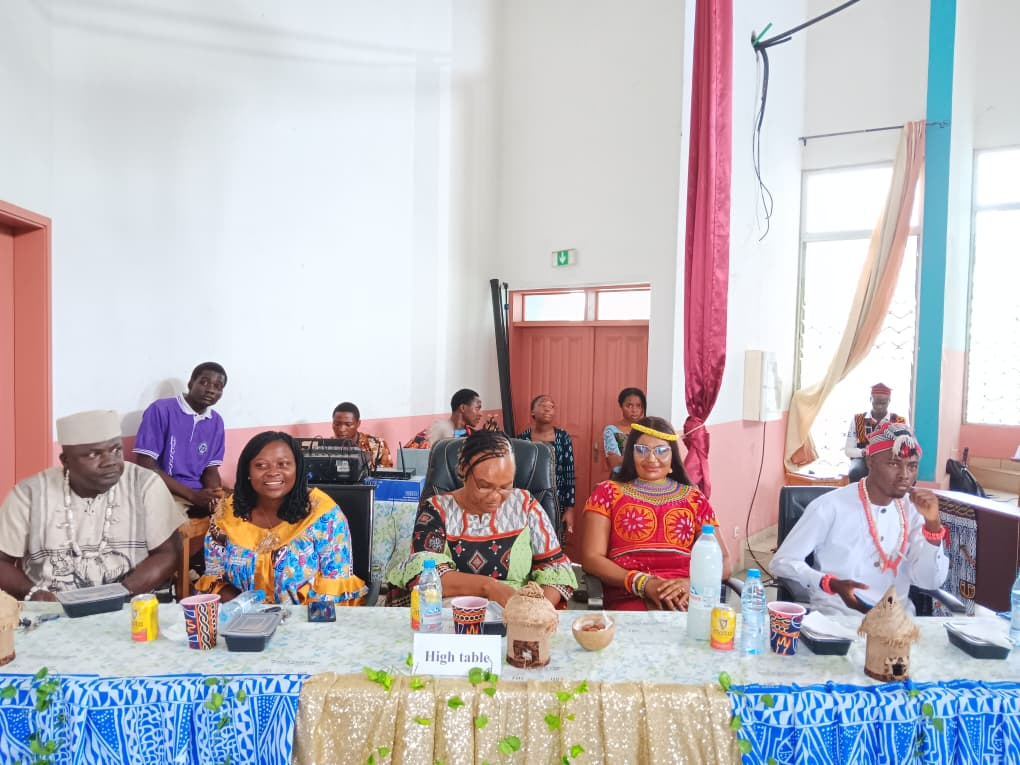
Administrators and HESSA president at the High table
A key highlight of the celebration was the launch of the faculty’s pioneer magazine, “The Pentagon,” which reflects the Faculty of Health Sciences’ identity, symbolising structure, unity, and coordination across its disciplines. The magazine serves as a platform to document student life, achievements, and institutional memory: “this magazine is not just a publication; it is a legacy project meant to preserve our journey and inspire future generations,” the HESSA president said, adding that proceeds will support future faculty initiatives and reinforce sustainability.
The celebration also featured the presentation of awards to outstanding students who distinguished themselves in the planning and execution of Cultural Week activities, as organisers used the moment to recognise commitment, creativity, and leadership within the faculty.
At the close of the celebration, he commended his executive team and all student leaders involved in organizing the event, describing their commitment as central to its success. An excursion scheduled after the main activities was also highlighted as part of efforts to further strengthen student bonding and relaxation after a demanding academic period.
The Vice Dean for Studies and Student Affairs, Professor Njunda Anna Longdoh, emphasized the importance of Cultural Week in shaping student identity beyond academics. She stressed that cultural identity plays a vital role in personal growth, warning that losing touch with one’s heritage weakens a person’s sense of belonging. “Students should never be ashamed of their culture; it is the foundation of who they are,” she said.
She also highlighted the broader relevance of cultural awareness in health sciences, explaining that understanding cultural diversity is essential in medical practice, as patients come from varied backgrounds requiring sensitive and informed care. “Cultural identity is not just heritage; it is essential in shaping how future health professionals understand and treat patients,” she added.
Dr. E. Warren Ojong, an emeritus president of HESSA (2020/2021), also praised the 2026 edition, describing it as a significant improvement over previous years. He noted: “This Cultural Week was definitely one step forward compared to previous years. We saw increased participation, more structured activities, and the historic launch of the magazine,” describing the Cultural Week as a unifying platform that brings together students, lecturers, and alumni, adding that the Faculty of Health Sciences continues to serve as a model for other faculties.
As advice to the incoming leadership, he urged future organisers to build on the current foundation and aim even higher, noting that the current edition already sets a strong benchmark. “This is already the standard, but again, they will have to go a little higher than what we saw today,” he said, suggesting innovations such as introducing a faculty cultural week material to promote unity and identity, while also calling for expansion of the event beyond the faculty to include wider participation from the University of Buea.
The 5th edition of the FHS Cultural Week thus closed on a high note, blending cultural expression, environmental awareness, academic identity, and institutional memory through the historic launch of The Pentagon magazine, marking not just a celebration, but the beginning of a lasting legacy.